

In this article, we would like to talk about carbonation, a chemical process that you have probably never heard of but which you will soon find out is very interesting.
Let's start with the technical definition: "Carbonation is a chemical process, natural or artificial, whereby a substance, in the presence of carbon dioxide, leads to the formation of carbonates."
This phenomenon is common in building materials such as binders (concrete, limestone, etc.) where the calcium hydroxide naturally contained in them, reacts with carbon dioxide resulting in the formation of calcium carbonate according to the following reaction: Ca(OH)2 +CO2 → CaCO3 +H2O
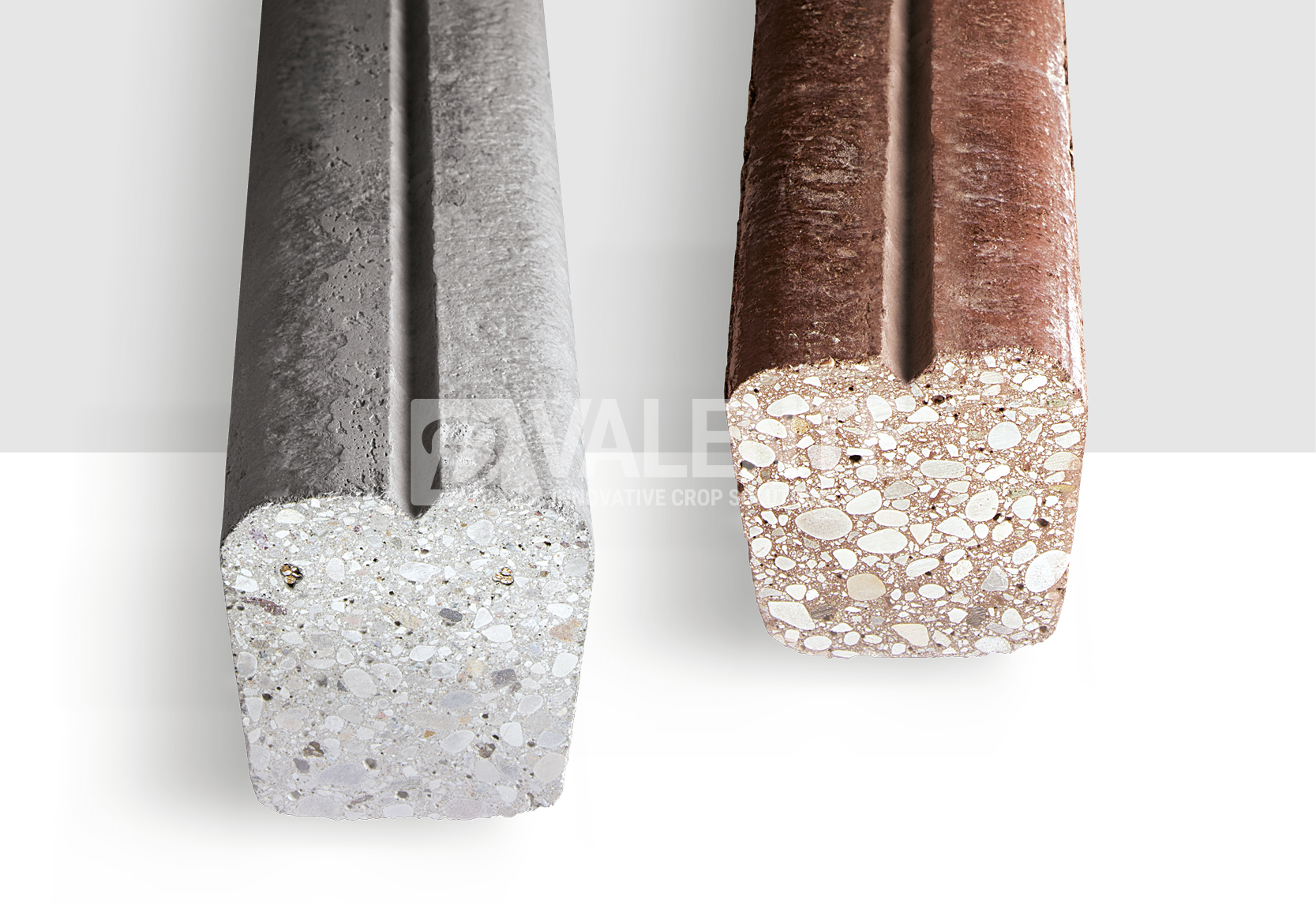
In reinforced concrete, which is the main component of our PRC posts, carbonation is one of the main causes of material degradation, although it is not a dangerous phenomenon since it does not cause mechanical or chemical damage (on the contrary, it reduces the porosity of the conglomerate and can lead to an increase in mechanical strength), nor does it directly damage the reinforcing bars of the reinforced concrete; however, in this case, carbonation essentially creates favourable conditions for the triggering of corrosion of the reinforcing bars.
It is therefore a phenomenon that directly affects prestressed concrete posts and which in 60 years of experience we have obviously learnt to understand and handle very well.
We therefore know, and so do our customers, that it is no problem for our PRC posts, which can cope with such 'aggression' for 30 years or more without seeing their functionality compromised.
What we want to focus on when talking about this process is, as mentioned at the beginning, the ability of concrete to 'react with carbon dioxide'.
What kind of reaction takes place exactly? We know that in the final analysis there is the formation of calcium carbonate, but what else occurs to make this happen?
So the reaction concrete has with carbon dioxide is to literally 'absorb' it from the environment!
You have read that correctly, but for clarity's sake we will repeat it: concrete, the main component of our PRC posts, 'absorbs' CO2 from the environment.
Obviously, there are many factors that influence the carbonation process, such as relative humidity, temperature, carbon dioxide content and alkalinity, porosity and permeability of the concrete.
But aside from these factors, can we say that the PRC post is sustainable? Absolutely yes!
Moreover, it actively contributes to the environment, with a balance between the CO2 produced for its manufacture and the CO2 absorbed during its life cycle that is absolutely positive.
How do we know that? As always, our R&D department worked hard and developed a complex calculation model[1] showing that our KLASSIC prestressed concrete posts over a 20-year life cycle absorb on average 42.44 times the value of CO2 emitted to produce them.
It is a respectable value, which in times of ecological transition and climate change can make an important difference.
To quantify the phenomenon and bring it into agricultural reality, we can say that the posts of a single hectare of orchard[2] remove in 20 years an additional 3,600 kg of CO2 from the environment compared to the amount emitted for their construction.
Basically, each year the system generates a positive balance between the CO2 absorbed and the CO2 emitted for its construction amounting to 180 kg.
Further analyses will be carried out in the near future to fine-tune the calculation basis and to obtain even better results from the production processes, also taking into account all the components designed and manufactured on the farm that are required to set up a complete orchard or vineyard system.
In the meantime, we are glad that these first figures can represent to us and to all our customers the awareness of actively contributing to environmental issues.
Learn more by downloading the Environmental Sustainability Document – PRC posts
[1] CO2 emitted for the production of 1 m of PRC post. The calculations are based on the specifications of the type of cement, the mixture and the geometry of the Valente posts and take into account the following fixed variables: emissions for the utilities, transport of all materials and machinery used for their production. At the customer's request, our calculation model can also accurately determine the impact of the variable related to the transport of the posts from the production site to the destination site.
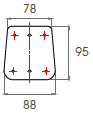
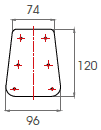
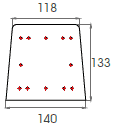
[2] Calculations made considering a "standard" installation with intermediate posts section 7x8, header and side posts section 8x12, corner posts section 14x14, post height 4.5m.