


Nowadays, growing hop presents farmers with new challenges due to adverse and unpredictable weather conditions, new pests that alter fruit quality, and increasingly competitive market conditions.
In such a scenario, it is important to set up the hop grove in the best possible way to obtain an abundant, high-quality harvest and protect it from all environmental threats, ensuring that farmers receive fair remuneration for their work.
When you choose Valente, you find a partner whose experience, professionalism, and top-quality products enable you to achieve your goals.
A tensile structure consisting of pre-stressed reinforced concrete posts connected by steel wires and cables, held in tension by special anchors fixed in the ground, is commonly used for hop cultivation.
The post sections used in a hop plant are on average larger (14x14 reinforced section) and stronger than those used in traditional plants.
This choice comes from the need to reach high heights in order to maximise plant productivity.
The Valente system, complete with accessories designed specifically for hops, allows for maximum productivity by increasing the number of plants in the same area.
The plants can be positioned both along the posts line and between the rows (where there are no posts), ensuring the stability of the structure even when fully loaded.
The system can reach a maximum height of 6.00 metres above ground level.
In recent years, the need for microbreweries and farm breweries to cultivate a small area of hops for internal use has led to the design of a small-scale system that we have called the “GDC single row”, so named because it is reminiscent of the frames used in GDC double curtain vine cultivation.
Compared to the tensile structure, the single row GDC system is a special simplified support structure that is independent from other neighbouring rows. It consists of pre-stressed reinforced concrete posts on which special support brackets are mounted, inside which metal wires run to support the shoots, allowing them to grow upwards.
This makes it possible to cultivate single or parallel rows, lowering production costs and making small-scale investment, which we can define as entry-level, economically viable and feasible.
The system can reach a maximum height of 6.00 metres above ground level.
Back to top


HOPS, Humulus Lupulus, are a dioecious, herbaceous, climbing, deciduous plant that can reach 7 metres in height and live for about 25 years.
In nature, it is found near riverbanks and canals, where it thrives by climbing trees and shrubs, often becoming invasive due to its dissemination. Pollination occurs by wind, and for this reason, wild plants are eliminated near cultivated areas. The varieties used for brewing and medicinal purposes are exclusively female, characterized by an oval-shaped inflorescence called a cone, composed of bracts and bracteoles rich in resinous glands that, once mature, release yellow-orange lupulin.
Depending on the variety, lupulin can have different aromatic and bitter characteristics, making it essential for imparting aroma and bitterness to beer.

In the medicinal sector, hops, being a cannabinoid, are used in the preparation of relaxing and calming compounds, precisely because, unlike hemp, they have no hallucinogenic properties.
The spring buds, which are removed using mechanized agricultural practices, can be harvested before the annual cutting of the stump and are very interesting for the culinary sector. They have always been used in the Veneto region in Italy (with the name of bruscandoli, i.e. young, edible shoots of the wild hop plant), as in other regions of Italy, for the preparation of traditional recipes. This niche product is sold on the market in the period prior to the asparagus harvest, at a rather high retail price.
Hops are grown in most continents, with different selections, often protected by patents held by production consortia and companies that have been operating in the sector for generations.
The largest producers are the United States, Germany, New Zealand, and Slovenia, where significant investments are made in research, processing, and hybridization.
Over the last decade, the market has been flooded with an enormous number of new patented varieties, often similar in aroma, the result of years of million-dollar research. However, this has led not only to considerable confusion but also to confirming that classic varieties are still going strong and that some truly unique varieties have established as the cornerstone of the cutting-edge brewing industry.
In Italy, the hop supply chain is still in its early stages, not only because of legislative loopholes in terms of field protection, but also because it is hard to get the brewing industry and craft brewers to commit to it, as they tend to stick to their habits and seem not very keen on experimenting with locally grown and processed ingredients. In recent years, several Italian growers have invested in processing the finished product, achieving quality and consistency in their hops, and guaranteeing compliance with standards.
HOP CULTIVATION
A sub-acidic soil pH favours most classic varieties, but we have also obtained interesting results with a neutral pH, and in any case not higher than 8, where the addition of humic and fulvic acids proves to be decisive.
Drainage is essential in order to eliminate water stagnation, as is good ventilation of the aerial part, avoiding areas characterized by the constant presence of strong winds.
Summer water requirements are approximately 4-6 litres of water, which can be administered with a drip system placed at a height of 120/140 cm from the ground and combined with fertigation and pH correction if necessary. Underground systems are not recommended.
The plant requires supports that are set up annually, which consist of specific coconut rope or iron wire with a thickness of 1.1-1.3 depending on ventilation. These supports are fixed after the stumps have been cut, on steel guide cables carried on poles 5-6m above the ground.
The planting pattern can vary, but it is generally characterized by rows every 3 m and 1-1.2 m between plants in the same row, depending on their vigour.
On average, two supports are placed on each stump, to which 3-5 shoots selected for their vigour are manually attached.
The plant reaches its maximum height in July and flowers in August, with the cones ripening between the end of August and mid-September, depending on the variety.
Harvesting is carried out by cutting the plant at a height of 1 m from the ground and ‘pulling’ the entire aerial part attached to the support using special self-loading carts or manually with self-propelled vehicles.
The flowers are separated using a special threshing machine inside a designated building adjacent to the drying room. Drying takes place on ventilated frames with forced hot air at a maximum temperature of 42-50°C, reducing the flower to about 3/4 of its weight with a maximum final moisture content of 8-12% once cooled. Many aromatic components deteriorate at drying temperatures above 50°C.
The entire product is pressed into bales, prepared for analysis and, if the results are good, they are duly pelletized.
The plant does not have a specific lifespan because it is “rejuvenated annually by cutting the stumps,” however, a period of 10 years is indicated as a possible longevity, or due to the need for varietal change.
HOP FIELD PLANT
The materials used as poles for the construction of a hop field are generally wood, steel, or, as in our case, special concrete poles. As is well known, the strength and resilience of these materials differ from one another. The use of wooden poles, still widely used due to their low cost, has proved unsuccessful, especially in recent times, due to strong winds that cause them to break and the entire structure to collapse with a domino effect, resulting in an obvious economic loss of the investment.
In Germany, after decades of mistakes, wooden poles are still used for the central part of the hop field, but the perimeter is replaced with large-caliber concrete poles. Heights in Germany can also exceed 6 m in some areas, so the likelihood of breakage increases significantly. Systems made with tubular steel poles are not very common because they are too expensive.
The Valente system, optimized after years of experience, has rows of poles every 6 m, with a distance of 10 m between poles. Special hooks and tie rods allow for perfect, easy adjustment and maintenance of the system tension. Given the height of the structure, the brown color of the pole is exceptional, as it blends in perfectly with the landscape, mitigating its impact even in town areas that are subject to restrictions.
In recent years, the need for microbreweries and farm breweries to grow small areas of hops for internal use has resulted in a reduced system that we like to call the “GDC Hop Field.”
The “GDC Hop Field” is so called because it recalls the GDC vine training system and double curtain, redesigned to be placed on 5-6m high concrete poles in a single row. This makes it possible to grow single or parallel rows, lowering costs and making small-scale investment, which we can define as entry-level, economical and feasible. This type of system is in high demand in Italy, France, and Spain, where small growers are increasingly numerous.
DEFENSE
Defense in the field focuses on combating fungal diseases such as Pseudoperonospora, Oidium, Alternaria, Verticillium, and arthropods such as black aphids, thrips, corn borers, stink bugs, and spider mites. Very few pesticides are permitted, and most defense is based on prevention, with the use of fortifiers, which - although it proves difficult to protect the plant if they are not used at the right time - guarantee a very healthy product unlike those found on the European and world markets.
We started over 60 years ago with the production of CAP poles, gradually growing to become one of the few manufacturers on the market able to provide customers with a turnkey system that fully meets their agronomic and business needs.
At Valente, we have a motto: “There is no innovation without tradition.” Since our foundation, we have always followed a dual path, consolidating and perfecting what worked while researching new solutions that would bring real improvements to fruit growing. No leaps into the unknown, but a policy of step-by-step progress that has allowed us to stay ahead without compromising on quality, providing our customers top-of-the-range products.
In the last year alone, we have created over 2,000 hectares of orchards in Italy and around the world, 80% of which are covered.
Customers rely on us, thus increasing their demand for turnkey solutions, from design to complete system installation. Therefore, even when weather conditions are not ideal, our clients can rest easy.
We know from our customers' feedback how much time and, above all, money a quick and easy-to-install system can save farmers. Similarly, regular annual maintenance, which involves re-tensioning wires and ropes, and any other extraordinary maintenance, becomes a breeze if the system has been built with due care and the right accessories.
A Valente system is designed for long service life. Expected lifespan depends on site conditions, loads, installation quality, and maintenance. Many installations remain in service for decades.
We have long structured our organization according to strict, internationally recognized quality standards. This allowed us to obtain UNI EN ISO 9001:2000 certification in July 2002 (later upgraded to the more recent UNI EN ISO 9001:2015), which guarantees customers they are dealing with a structured, efficient, and organized company.
We have also obtained the new and prestigious DNV product certification for prestressed reinforced concrete poles, which are therefore guaranteed through rigorous quantitative and qualitative controls for durability, frost resistance, mechanical properties, and material dosage and mixing.
The use of orchard coverings, now common practice for most crops grown using modern farming methods, actually has a fairly recent history. In the 1960s, when our company entered the market with the production of pre-stressed reinforced concrete poles, the idea of covering orchards was certainly not a priority for farmers, but, as is now clear, many things have changed in just over 60 years.
Starting in the 1980s, besides hail protection, other needs emerged such as protection from insects, rain, wind and sun.
Thanks to the experience we've gained over the years, two other new aspects have emerged that are proving to be fundamental.
The first is that these coverings, in addition to fulfilling their specific functions, can actually be multifunctional, i.e. capable of performing multiple tasks and offering different types of protection.
The second is that coverings also guarantee a better microclimate for crops in various ways, creating a more favourable environment for plant growth and increasing fruit productivity and quality.
Scientific literature on this subject is now quite extensive and, although necessary distinctions must be made regarding the type of coverings, cultivation and characteristics of different territories, it agrees on confirming the benefits in relation to the following parameters.
These are vital benefits, especially when we consider that the environmental situation is continuing to evolve and become more complicated, with mild winters and late frosts, concentrated and more intense rainfall, frequent hailstorms, excessive wind and sunlight, and an increase in alien pathogens.
This scenario leads to one conclusion: fruit growing without orchard covering systems is now unimaginable.
Obviously, there are different types of solutions, from traditional anti-hail systems to multifunctional ones complete with insect nets, single-wire or monobloc systems with different levels of automation, but all of them have a positive impact. Despite representing a significant initial investment, they bring long-term benefits in terms of improved quality and quantity of production that more than justify the costs.
All our posts are equipped with a QUALITY CERTIFICATE which includes data on the sheet metal used and its mechanical resistance to IMPACT and BENDING.
There are two factors, in addition to the quality of the sheet metal which is not visible to the naked eye, which allow us to achieve superior results compared to any other similar product on the market, given the same thickness and cross-section:

The shape/geometry of the profile, which features many folds and ribs.
The number of front ribs, clearly visible on the surface of the post, and the number of folds, which can be easily calculated and compared with similar products on the market, are directly proportional to the strength of the post.
Few folds and few ribs = low strength.

The side wire hooks, also called slots, in Valente posts are made by bending the sheet metal inwards and not by removing/cutting away sheet metal, which weakens the post itself at this critical point.
Furthermore, having side slots aligned with the rest of the post, rather than protruding, greatly reduces the risk of them bending during the many mechanised activities that take place in the vineyard. This is unlike products with external hooks which, although they may seem practical, are more likely to be damaged during harvesting and other activities.
Sezione | Lunghezza | Armatura | Peso | Dimensioni |
| 6×6 | Da 2,00 a 3,80 m | 8 fili = 4 trecce 2×2,25 | 8 kg/m |  |
| 7×7 | Da 2,50 a 4,70 m | 8 fili = 4 trecce 2×2,2512 fili = 4 trecce 3×2,25 | 11 kg/m |  |
| 7×8 | Da 2,50 a 5,50 m | 12 fili = 4 trecce 3×2,25 | 12 kg/m |  |
| 8×8 | Da 2,50 a 5,50 m | 12 fili = 4 trecce 3×2,25 | 15 kg/m |  |
| 9×9 | Da 2,50 a 5,50 m | 12 fili = 4 trecce 3×2,2518 fili = 6 trecce 3×2,25 | 19 kg/m | 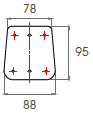 |
| 8×12 | Da 2,70 a 5,80 m | 18 fili = 6 trecce 3×2,25 | 25 kg/m | 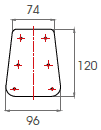 |
| 14×14 | Da 4,20 a 5,80 m | 36 fili = 12 trecce 3×2,25 | 42 kg/m | 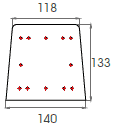 |
We realize tensile structures that requires to be anchored to the ground to grant a permanent tension of the system.
We need therefore elements that, once set in the ground, are able to grant an adequate resistance and stability. They are of different shape and size, to suit the different types of structure and soil.
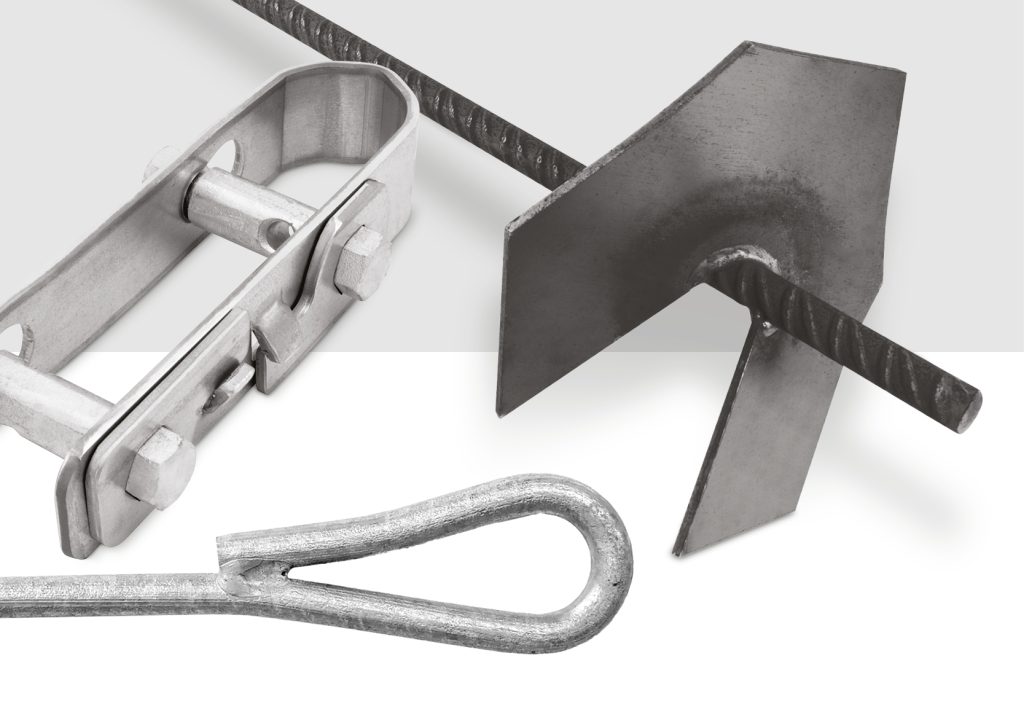
This type of anchorage consists of a rod and a reinforced concrete plate.
It is used when the soil has gravel or rock inside it or in the presence of extremely sandy soils.
The hexagonal anchors are not galvanized because steel thickness and rod diameter are so big to minimize any corrosion damage that might cause product destruction.
This type of anchoring is ideal for the creation of anti-hail, anti-rain or shading covering systems on terrain without gravel or rock.
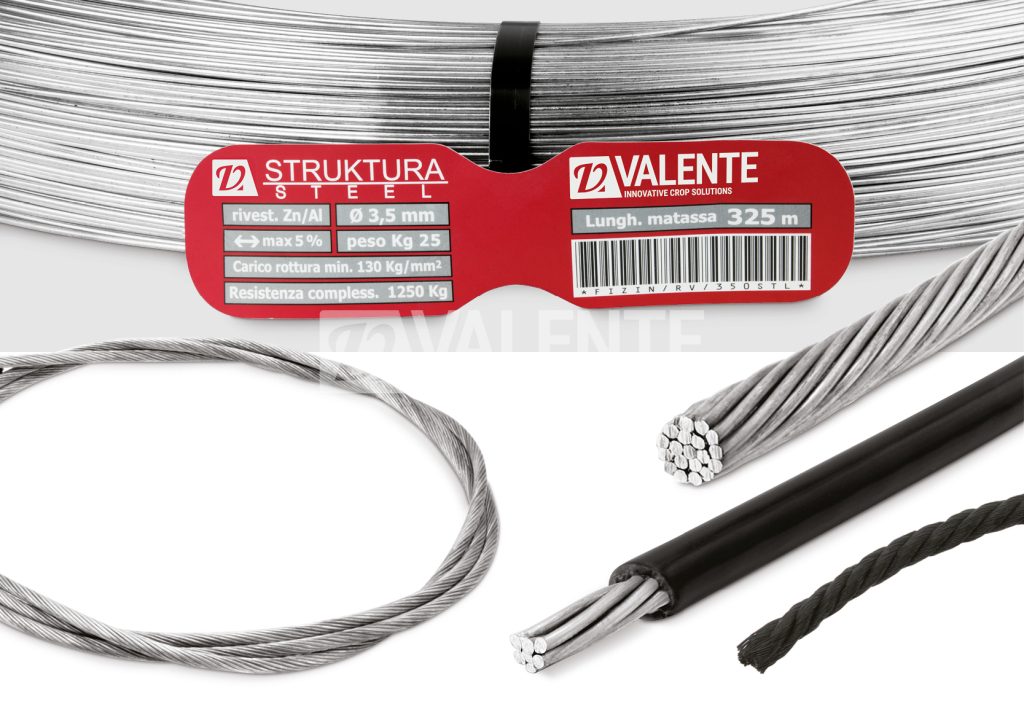
STRUKTURASTEEL steel wire is made of high-carbon steel (greater than 0.6%) coated with a zinc-aluminum alloy. It is drawn in diameters ranging from 1.60 to 4.00 mm and is used to connect all intermediate posts, providing support for plants and securing branches. It is also used to connect the ends of posts when covering them with a covering material, such as hail netting.
Cables are used to connect pile to anchor in systems with rear anchoring. Furthermore, they are used in anti-hail systems for longitudinal and transversal connection of piles, to stabilize the whole structure.
Cables, formed by intertwining wires, are highly flexible and easily adjustable to anchored parts.
Wires quantity depends on cable intended purpose and, consequently, desired resistance.
ROPSTEEL cable can also be supplied galvanized with a black plastic coating so that surface touching the net is perfectly smooth, avoiding net early wear due to brushing on cable.
A cut-to-size cable with slipknot has been created to ease installation operations and make them quicker and safer.
In small fruit crops such as strawberries, blueberries, blackberries, raspberries and currants, various insects can cause significant damage to both the plant and the fruit. Here are the main ones:
The spotted wing drosophila Drosophila suzukii (Diptera: Drosophilidae), native to Southeast Asia, appeared in Europe in 2008 in Spain and Italy, subsequently spreading throughout the continent. In Italy, D. suzukii spread from north to south and to the islands in just a few years.
The Nematus ribesii is a sawfly belonging to the Tenthredinidae family. It is known as a parasite of gooseberries.
The Anthonomus rubi, known as the strawberry or raspberry weevil, is a small curculionid beetle that causes damage particularly to the flower buds of these species.
The Frankliniella occidentalis affects several species, including strawberries, where it causes brown streaks and deformation of the petals and malformation of the fruit. In the most severe attacks, the flowers may abort and the fruit may show browning and blackening of the achenes.
Aphids on small fruits (strawberries, currants, raspberries, etc.)
The Chaetosiphon fragaefoli sucks the sap from strawberry plants. The leaves and fruits become sticky due to the honeydew secreted, on which sooty moulds grow. It is also an important vector of several viruses that affect strawberries (Crinke virus, Mild yellow-edge virus).
The Yellow currant aphid (Cryptomyzus ribis) causes blistering and false galls on the edges of the leaves, which turn a wine-red colour. This damage spreads rapidly to other plants, hindering the development of the
The Cochineal is a small insect similar to aphids that feeds on the sap of currant plants. The honeydew it secretes spreads disease and dirties the berries, reducing their value.
The whitefly belongs to the order Hemiptera. Whiteflies belong to the Aleurodidae family; they suck sap and vector certain viruses. The sugary liquid excreted by the nymphs promotes the appearance of fungi such as sooty mould (a black fungus that disfigures affected plants) on the leaves.
Leaf-eating moths (Lepidoptera): their larvae can damage leaves and compromise blueberry development. The most common are the blueberry bush moth, whose larvae feed on leaves and shoots, and the blueberry moth, which mainly attacks the fruit.
The presence of defoliating moths can be seen by the remains of buds and flowers hanging from thin silk threads.
Beetles and mining larvae can damage blueberries. Adult beetles, such as the Japanese beetle (Popillia japonica), feed on leaves and flowers, causing damage to blueberry production. Mining larvae dig tunnels inside the leaves, and adults feed on leaves and flowers, affecting production.
La rete anti insetto è realizzata dalla tessitura di monofilo plastico e viene utilizzata per coprire e proteggere adeguatamente le colture dai danni causati dagli insetti, soprattutto la DROSOPHILA SUZUKI, la CARPOCAPSA e la CIMICE ASIATICA.
Il materiale utilizzato per la realizzazione delle reti anti insetto è il polietilene ad alta densità (HDPE). Il filo utilizzato è realizzato per estrusione, fondendo e facendo passare attraverso delle griglie forate (estrusori) la materia prima; successivamente viene termostabilizzato, ovvero viene riscaldato per far diminuire tutte le ritrazioni che normalmente presenta il materiale plastico esposto a fonti di calore anche modeste.
La rete antinsetto è realizzata lavorando il monofilo con una particolare tecnica chiamata tessitura a telaio: la maglia che si ottiene con questo tipo di lavorazione è di forma rettangolare di misura variabile ed è indeformabile, cioè le dimensioni non variano quando il telo anti insetto è sottoposto alle sollecitazioni.
Le reti anti insetto sono disponibili nelle seguenti dimensioni:
Rete ANTI-CARPOCAPSA: H 2,50 – 4,00 – 4,60
Rete ANTI-SUZUKI: H 2,00 – 2,50 – 3,00

Anti-hail net is manufactured weaving a plastic monofilament and is used to cover and properly protect crops from damages caused by hail.
Net must be installed and fixed on special structures to provide total protection from bad weather, still maintaining a minimum elasticity to avoid premature material wear.
Material used to make the net is high-density polyethylene (HDPE). Wire used is made by extrusion, melting and passing raw material through perforated grids (extruders); subsequently it is thermostabilized, that is to say heated to reduce all retractions that plastic material exposed to even modest heat sources normally presents.
Anti-hail net is made manufacturing monofilament with a particular technique called “loom weaving”; obtained mesh has a rectangular 2.8 x 8 mm shape and is non-deformable, meaning dimensions don’t change when subjected to hail load.
Net weaving is “Leno weaving”, so mono-wire is woven into weft and warp threads.
Anti-hail net is certified and designed for long-lasting performance. Documentation is provided at purchase.
Actinidia (kiwi) cultivation can be threatened by various phytophagous insects, some of which cause direct damage to the fruit, while others weaken the plant, making it more vulnerable to disease. Here are the main ones:
Argyrotaenia pulchellana (Eulia) is a polyphagous leaf-rolling moth that feeds on the leaves, flowers and fruit of numerous herbaceous and arboreal plants, both cultivated and wild.
Metcalfa pruinosa is a homopteran insect belonging to the Flatida family. It can attack kiwifruit, sucking sap and producing white waxy secretions, expelling the sugary part as honeydew and causing the development of sooty moulds, which facilitate the growth of harmful fungi that cover the leaves and fruit with a black coating, reducing photosynthesis and growth.
Pseudaulacaspis pentagona (white scale insect) can cause damage by piercing the shoots of actinidia, causing stress and weakening the plant. In the most serious cases, the branches dry out and fruiting is compromised. Affected fruit develop a reddish halo around the follicles, causing serious economic damage, as they cannot be sold or exported.
Empoasca vitis (green leafhopper) pierces the leaves of actinidia, altering lymphatic flow and transpiration and causing yellowing that rapidly spreads from newly formed leaves to older ones. Necrosis begins at the edges of the leaves, which then fall off, causing a reduction in photosynthesis.
Panonychus ulmi (red spider mite) can infest kiwifruit in hot, dry weather conditions. Repeated bites from the mites reduce the functionality of the foliage, causing leaf discolouration, premature leaf fall and general weakening of the affected plants.
Autographa gamma: The larvae of these lepidoptera can cause significant damage to actinidia plants as they feed on leaves and shoots, the loss of which reduces and may affect photosynthetic capacity, leading to a subsequent reduction in fruit production and quality.
Halyomorpha halys is an extremely polyphagous species that also affects actinidia plants. In spring, the adults colonise the plants, feed and lay their eggs. The larvae, which go through several stages of development, also feed on the sap of the plants and fruits, causing them to fall and become deformed, thus compromising their marketability.
MONILIA DISEASE OF THE CHERRY TREE
Monilia is one of the most widespread and easily recognisable diseases affecting cherry trees. It is caused by two different parasites, called Monilia laxa and Monilia fruttigena, which thrive in particularly damp soil and when the plant is not pruned and disinfected correctly.
The most dangerous period is spring, when temperatures begin to rise and irrigation may be more abundant, with a higher risk of liquid accumulation and stagnation, which causes the fungus to proliferate.
It is easy to recognise when the leaves, flowers or fruits suddenly become darker, as if covered with a thick, compact layer of grey mould, which tends to rot them from the outside inwards and cause them to fall off.
The branches appear dry, with cracks that are an indication of the disease, inside which spores proliferate and where other variants of different bacteria can also insidiously develop.
CORINEO DISEASE OF THE CHERRY TREE
Corineo is also commonly referred to as shot -hole disease, precisely to emphasise how the disease manifests itself with small spots that tend to affect every part of the plant, starting with the leaves.
The characteristic colour of these anomalies is a reddish-purple that forms a distinctive halo that spreads across the entire surface, causing the leaf or fruit to fall and die.
The disease can also be recognised by the small holes that form inside the halo, as well as on the branches near the buds, which are unable to blossom and therefore transform.
The cherries also show encrustations that are difficult to remove and prevent the fruit from being edible.
This is another fungal disease that occurs mainly in spring, when the temperature is very humid and the spores find fertile ground for proliferation.
BACTERIA CANCER OF THE CHERRY TREE
The name sounds rather threatening, and indeed this is one of the most dangerous diseases that can affect this variety.
In this case, it is not caused by a fungus but by a bacterium, which likes to nestle in various types of stone fruit and lead to their premature death, first drying out the branches at the ends and then reaching the heart of the tree and its roots.
The symptoms of bacterial cancer are dark spots that appear irregularly on the leaves, with lighter, blurred halos and necrotic parts on woody areas such as branches and the trunk.
THE ROTTEN CHERRY TREE
Rottenness is one of the most common diseases affecting cherry trees and is caused by a number of factors.
The first factor is excessive irrigation of soil that is already very moist, which causes puddles and waterlogging, leading to the deterioration of the roots as they extend upwards.
The second factor is certain types of fungi, which manifest themselves in this way and must therefore be treated with sulphur-based products and other antibacterial and antiseptic agents. One of the fungi that most affects cherry trees in the Vignola area and is already present in Puglia is Armillaria mellea, a fungus that appears on the roots with a whitish colouring that can lead to the death of the plants. This is more prevalent in soils where cherry trees have been cultivated for a long time.
To prevent this phenomenon, it is therefore advisable to pay attention to soil preparation, adjusting watering according to weather conditions and pruning dry and diseased parts tactically to prevent them from damaging the fruit.
LEAF SPOT DISEASE OF THE CHERRY TREE
Also known as leaf blight, this disease tends to occur mainly in summer and is caused not by a lack of water, as one might mistakenly think, but by a fungus called Gnomonia erythrostoma.
This misunderstanding often leads to delayed action, but it is possible to recognise the difference by noticing yellow patches with a red halo around them, which tends to darken when the necrosis is already at an advanced stage.
The dry leaf tends to fall off, leaving the plant bare.
As with any other infection of this kind, the key is to use a sulphur-based product or the classic copper sulphate to stop the spores from spreading, taking care to remove any damaged parts that are beyond repair and will only encourage the disease to spread.
LEAF-RUST DISEASE OF THE CHERRY TREE
Similar to the previous disease in terms of symptoms, this disease manifests itself with brownish spots mainly on the upper side of the leaf, which gradually darkens until it dies and falls off.
The disease then spreads to the branches, preventing the buds from blooming and thus preventing fruit formation.
The white pustules that accompany this condition can be defeated with a copper-based spray, which is disinfectant and antifungal, combined with a sulphur component for a stronger action.
BLACK APHIDS ON THE CHERRY TREE
This is a disease that can be easily recognised, as it develops following infestation by small black insects that are visible to the naked eye.
These insects bite the shoots of cherry trees and other fruit trees, depositing a large number of other young aphids that do the same thing.
The tree will die quickly if immediate action is not taken, resulting in small, deformed and inedible cherries.
The only solution is to use a specific insecticide or have the tree professionally treated by a pest control expert.
In cherry orchards, various insects can compromise the quality and yield of cherries. Here are the main pests to watch out for:
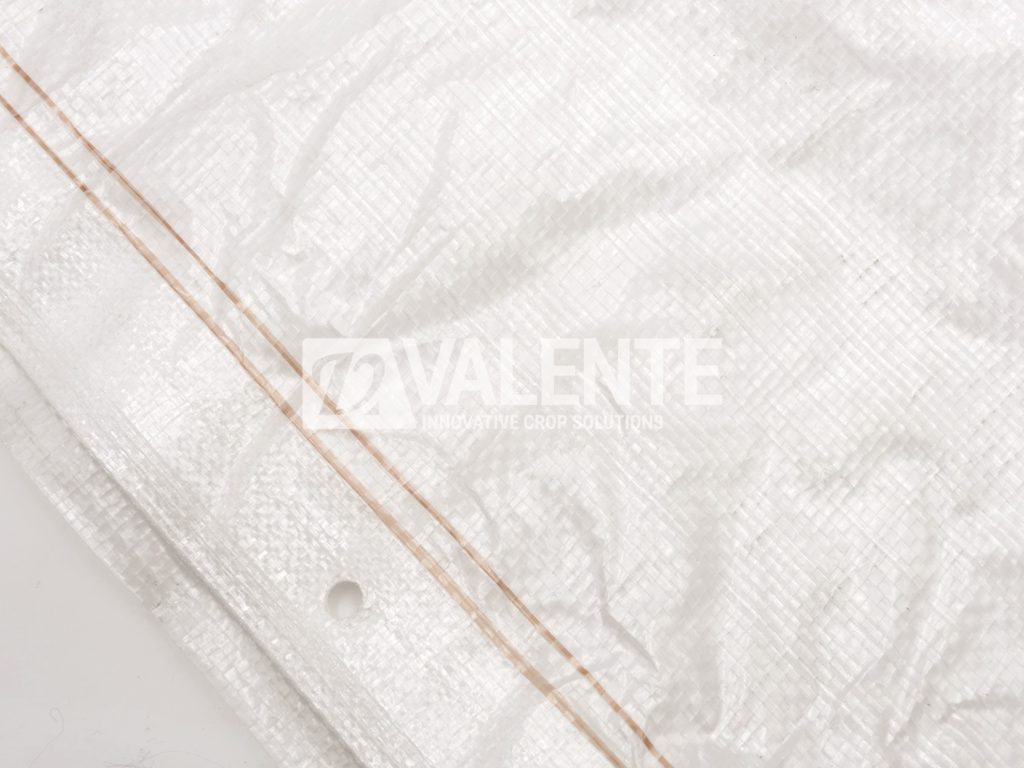
The rainproof film is a raffia fabric plastic-coated on one side and is used to cover and adequately protect crops from damage caused by rain.
Through a patented welding process, reinforced side selvedges (triple layer of fabric) are applied, essential for secure attachment to the structure; the entire film is waterproof, has considerable mechanical strength and tear resistance.
In addition, perforations are made along the edge of the film so that hooks or carabiners can be inserted to secure it to the structure.
The technical characteristics of the rainproof film are as follows:
Valente offers a quick and automatic system that allows rain covers to be opened and closed like an umbrella, for optimal cherry orchard management.
This innovative technology, installed exclusively on the Multishield structure, offers great advantages and represents a complete, effective, flexible and safe solution for farmers to protect their crops.
The particular arrangement of the Multishield system's covers allows the operator to slide them along the frame of the structure, so that they can be opened and closed as needed, with the great advantage of allowing the plants to grow in normal conditions for most of the time, covering them only when necessary, i.e. when there is a real risk of rain, thus promoting the best development.
The Valente system makes this operation quick and effective, allowing a single worker to close or open the cover much faster than manual systems.
Peach and apricot orchards are susceptible to various harmful insects that can compromise the quality and quantity of the harvest.
On peach trees, damage is mostly during harvest time; attacks during flowering and fruit set only happen in protected crops, while they are rare for open field crops. The damage is only cosmetic and shows up as discolouration of the skin, mostly on nectarine cultivars, where it can seriously depreciate the product.
Insects

In apple and pear orchards, various insects and fungi can cause significant damage to both the plants and the fruit. Here are the main ones:
Apple tree
Pear Tree
Mushrooms
The most common fungal diseases affecting apples and pears are:
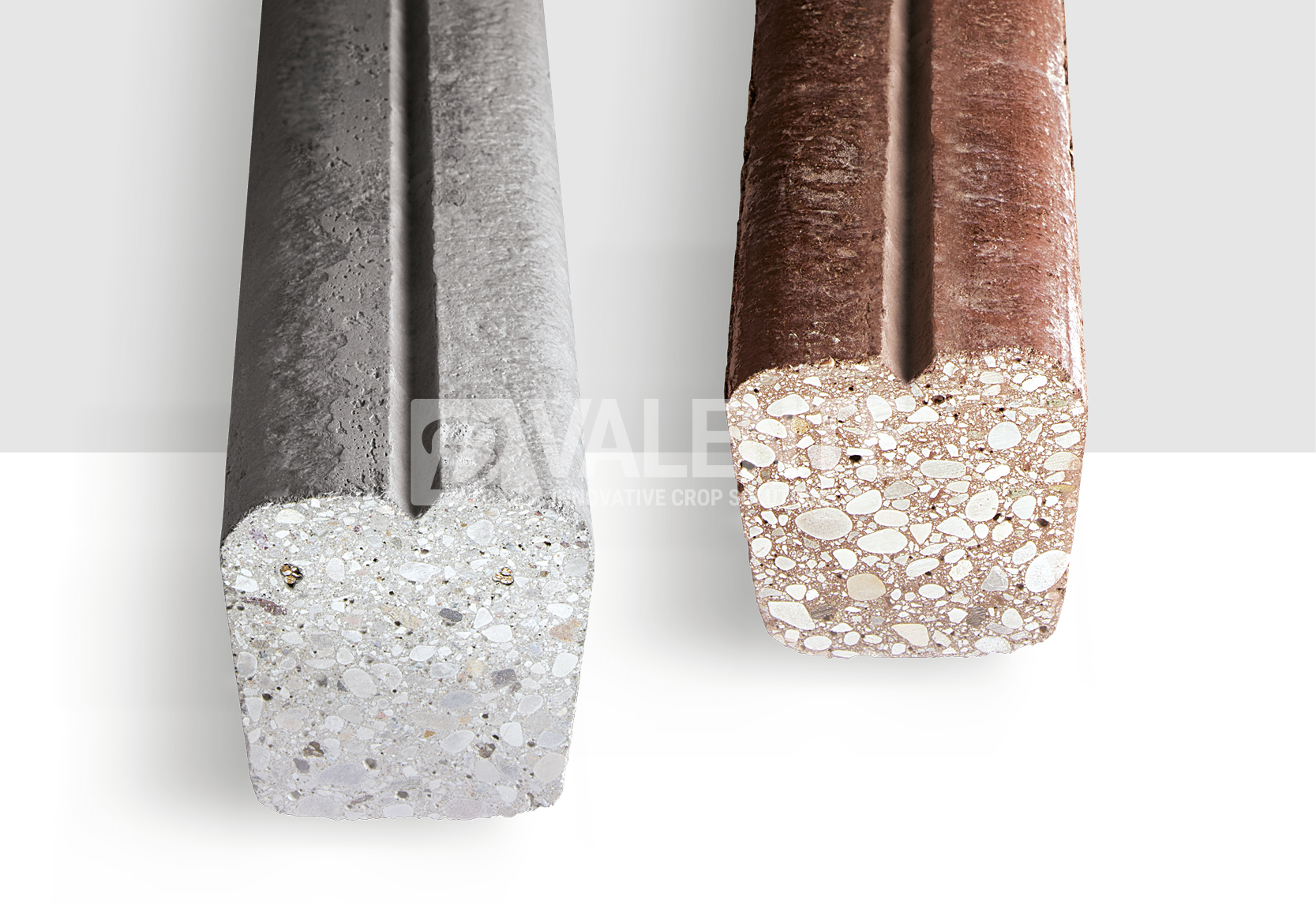
Prestressed Reinforced Concrete poles are made using pre-tensioning technique, which ensures a greater mechanical resistance.
Valente pole has a trapezoidal shape with four smooth sides and no edges, so not to wear hail nets out in orchard installations. Our trademark is on the front: V for Valente!
Valente pre-stressed cement piles are realized with the wize combination of two fundamental components: concrete (natural gravel and sand mixed with PORTLAND 525 cement) and the high carbon content steel braid with low relaxation (made of two or three braided wires with a diameter of 2.25 mm).
The quality of Valente poles are guaranteed by DNV through Product Quality Certificate.
The poles are available in the KLASSIC version in grey or brown and in 9 sections, with heights from 2 m to 5.8 m.


