


INFORMATIVA IN TEMA DI C.D. “WHISTLEBLOWING” (D.LGS. 24/2023)
La presente informativa è finalizzata a comunicare a tutti gli stakeholders aziendali i contenuti, le modalità e le garanzie per l’inoltro in via riservata di segnalazioni di violazioni e illeciti ai sensi del D.lgs. 10 marzo 2023, n. 24 recante “Attuazione della direttiva (UE) 2019/1937 del Parlamento europeo e del Consiglio, del 29 ottobre 2019, riguardante la protezione delle persone che segnalano violazioni del diritto dell’Unione e recante disposizioni riguardanti la protezione delle persone che segnalano violazioni delle disposizioni normative nazionali”.
Destinatario della segnalazione
La gestione del canale interno di segnalazione è affidata al Gestore delle Segnalazioni individuato nell’Organismo di Vigilanza nominato ai sensi del D.lgs. 231/2001 con delibera del Consiglio di Amministrazione. È possibile altresì inoltrare la segnalazione all’Autorità nazionale anticorruzione (ANAC) tramite il canale esterno (art. 7 D.lgs. 24/2023) o con divulgazione pubblica tramite la stampa o mezzi elettronici.
Contenuto della segnalazione
Il segnalante è tenuto a fornire tutti gli elementi utili a consentire una diligente e appropriata verifica ed in particolare:
Eventuali segnalazioni anonime potranno essere prese in considerazione per ulteriori verifiche solamente allorquando le informazioni ivi contenute consentano di dar corso ad un’adeguata istruttoria nel rispetto di quanto previsto dalla presente procedura e dagli artt. 4, 5 e 12 D.lgs. 24/2023.
Modalità di inoltro e gestione della segnalazione
Le segnalazioni sono effettuate in forma scritta o orale con le seguenti modalità:
Nel caso di segnalazione effettuata oralmente, previo consenso della persona segnalante, essa è documentata mediante registrazione su dispositivo o verbale, che la persona segnalante può verificare, rettificare e confermare il verbale dell’incontro mediante la propria sottoscrizione.
La segnalazione interna presentata ad un soggetto diverso dal Gestore delle Segnalazioni è trasmessa a cura del ricevente e nel rispetto delle garanzie di riservatezza a quest’ultimo entro sette giorni dal suo ricevimento, dando contestuale notizia della trasmissione alla persona segnalante.
Il Gestore delle Segnalazioni rilascia alla persona segnalante avviso di ricevimento della segnalazione entro sette giorni dalla data di ricezione, potendo richiedere ogni integrazione utile o necessaria. Esso procede a sentire la persona coinvolta, anche ove lo richieda, anche mediante procedimento cartolare, attraverso l’acquisizione di osservazioni scritte e documenti. Il Gestore fornisce riscontro alla segnalazione entro tre mesi dalla data dell’avviso di ricevimento o, in mancanza di tale avviso, entro tre mesi dalla scadenza del termine di sette giorni dalla presentazione della segnalazione. In qualunque momento il segnalante può chiedere informazioni al Gestore delle Segnalazioni sullo stato di avanzamento del procedimento mediante l’invio di apposita richiesta, con le modalità usate per la trasmissione della segnalazione.
Obbligo di riservatezza
Il contenuto e l’identità della persona segnalante e qualsiasi altra informazione da cui essa possa evincersi, direttamente o indirettamente, non possono essere rivelate, senza il consenso della persona segnalante, a persone diverse da quelle competenti a ricevere o a dare seguito alle segnalazioni ed espressamente autorizzate a trattare tali dati.
Misure di protezione
Nei confronti del segnalante si applicano le misure di protezione previste dal capo III del D.lgs. 24/2023 ed in particolare:
Divieto di ritorsione – il segnalante non potrà essere destinatario di ritorsioni in ragione della segnalazione effettuata, tali intendendosi: licenziamento, sospensione o misure equivalenti; retrocessione di grado o mancata promozione; mutamento di funzioni, cambiamento del luogo di lavoro, riduzione dello stipendio, modifica dell’orario di lavoro; sospensione della formazione o qualsiasi restrizione dell’accesso alla stessa; note di merito negative o referenze negative; adozione di misure disciplinari o di altra sanzione, anche pecuniaria; coercizione, intimidazione, molestie, ostracismo; discriminazione o comunque trattamento sfavorevole; mancata conversione di un contratto di lavoro a termine in un contratto di lavoro a tempo indeterminato, laddove il lavoratore avesse una legittima aspettativa a detta conversione; mancato rinnovo o la risoluzione anticipata di un contratto di lavoro a termine; danni, anche alla reputazione della persona, in particolare sui social media, o i pregiudizi economici o finanziari, comprese la perdita di opportunità economiche e la perdita di redditi; inserimento in elenchi impropri sulla base di un accordo settoriale o industriale formale o informale, che può comportare l’impossibilità per la persona di trovare un’occupazione nel settore o nell’industria in futuro; conclusione anticipata o l’annullamento del contratto di fornitura di beni o servizi; annullamento di una licenza o di un permesso; richiesta di sottoposizione ad accertamenti psichiatrici o medici.
Gli atti assunti in violazione del divieto di ritorsione sono nulli. Le persone che siano state licenziate a causa della segnalazione hanno diritto a essere reintegrate nel posto di lavoro, ai sensi dell’art. 18 L. 300/1970 o dell’art. 2 D.lgs. 23/2015, in ragione della specifica disciplina applicabile al lavoratore. Il segnalante destinatario di atti di discriminazione ha altresì diritto ad adire l’autorità giudiziaria affinché adotti tutte le misure, anche provvisorie per assicurare tutela alla situazione giuridica soggettiva azionata, ivi compresi il risarcimento del danno, la reintegrazione nel posto di lavoro, l’ordine di cessazione della violazione del divieto di discriminazione e la dichiarazione di nullità degli atti così adottati.
Limitazione della responsabilità – non è punibile l’ente o la persona che riveli o diffonda informazioni sulle violazioni coperte dall’obbligo di segreto o relative alla tutela del diritto d’autore o alla protezione dei dati personali ovvero riveli o diffonda informazioni sulle violazioni che offendono la reputazione della persona coinvolta o denunciata, quando, al momento della rivelazione o diffusione, vi fossero fondati motivi per ritenere che la rivelazione o diffusione delle stesse informazioni fosse necessaria per svelare la violazione e la segnalazione è stata effettuata.
Rinunce e transazioni – le rinunce e le transazioni, integrali o parziali, che hanno per oggetto i diritti e le tutele previsti dal D.lgs. 24/2023 non sono valide, salvo che siano effettuate nelle forme e nei modi di cui all’art. 2113 co. 4 c.c.
Nota informativa
Con la presente comunicazione si rende altresì noto che:
Privacy e Trattamento dei dati personali
Titolare del Trattamento dei dati personali è VALENTE SRL, con sede in via L. Galvani 2/4 – 35011 Campodarsego (PD), c.f. e p.iva 00257760280, in persona del legale rappresentante, che opera mediante il Gestore delle Segnalazioni individuato nell’Organismo di Vigilanza nominato ai sensi del D.lgs. 231/2001 con delibera del Consiglio di Amministrazione.
Categorie di dati personali
In linea di principio, il sistema di segnalazione illeciti può essere utilizzato dal segnalante anche mantenendo l’anonimato e quindi senza fornire dati personali e in particolare la propria identità. Il conferimento dei dati personali è facoltativo e pertanto l’eventuale mancato conferimento dei dati non pregiudicherà il diritto a ricevere un riscontro alla segnalazione, e a godere delle tutele previste dalla legge.
I dati personali potranno essere acquisiti dalla Società in quanto contenuti nella segnalazione o negli atti e documenti a queste allegati, oppure tramite specifici approfondimenti istruttori. Le persone a cui si riferiscono i dati personali trattati sono, tra l’altro i) persone a conoscenza dei fatti segnalati, o che comunque vengono richieste di fornire informazioni a fronte di una segnalazione ii) “soggetti coinvolti” (cioè incolpati della violazione oggetto della segnalazione), iii) “soggetti tutelati” (cioè che godono delle tutele inderogabili previste dalla normativa a fronte di una segnalazione), iv) altre persone che a vario titolo possono essere messe a conoscenza della segnalazione.
Trasferimento e destinatari dei dati personali
Il Titolare nel rispetto della tutela della riservatezza dell’identità del segnalante, potrà condividere i dati, in conformità al principio di stretta necessità, proporzionalità e minimizzazione, con:
Modalità del trattamento e misure di sicurezza
La Società adotta misure tecniche e organizzative adeguate per garantire la protezione dei dati e la riservatezza, fatto salvo quanto previsto dall’art. 12 del D. lgs. n. 24/2023 – con particolare riferimento all’identità del segnalante, delle persone coinvolte e/o comunque menzionate nelle segnalazioni, del contenuto delle stesse e relativa documentazione.
Il trattamento dei dati è svolto con modalità cartacee ed anche telematiche ad opera di soggetti formalmente incaricati. Il trattamento non prevede processi decisionali automatizzati, compresa la profilazione, rientranti nell’ambito di applicazione dell’art. 22 Reg. UE 2016/679.
I dati personali sono conservati su server ubicato all’interno dell’Unione Europea. Il titolare ha svolto una valutazione di impatto e predisposto adeguate misure di sicurezza a protezione dei dati personali.
Base giuridica e finalità del trattamento
I dati saranno trattati per le seguenti finalità: i) valutare l’ammissibilità e fondatezza della segnalazione di illeciti comunicata, ii) applicare le misure di tutela e supporto dei soggetti protetti dalla normativa, iii) dare seguito alla segnalazione e, se possibile, misure di risposta ai risultati di una segnalazione, iv) applicare eventuali misure disciplinari o altre sanzioni contro chi segnala con dolo o colpa grave, o contro eventuali soggetti coinvolti ai quali sia addebitabile la violazione segnalata, v) difesa o accertamento di nostri diritti nel contesto di procedimenti giudiziali, amministrativi o stragiudiziali e nell’ambito di contenziosi civili, amministrativi o penali sorti in relazione alla segnalazione effettuata, vi) adempiere a qualsiasi obbligo previsto da una legge, da un regolamento o da un’altra normativa applicabile.
Tenuto conto della normativa di riferimento, il trattamento dei dati si fonda sull’obbligo di legge a cui è soggetta la Società in quanto Titolare del trattamento (art. 6, par. 1, lett. c) del GDPR) ai fini del rispetto delle prescrizioni di cui al D. Lgs 24/2023, e, per quanto concerne gli eventuali dati particolari riportati volontariamente dal Segnalante, la condizione abilitante è da rinvenirsi nei motivi di interesse pubblico rilevante sulla base del diritto dell’Unione e degli Stati Membri in relazione alla motivazione per cui è stata disposta la normativa whistleblowing (art 9, par. 2, lett. g) del GDPR ed art. 2 sexies par. 1 del D. Lgs 196/03), nonché, in relazione ai dati particolari, nell’assolvimento di obblighi e sull’esercizio di diritti specifici del Titolare del trattamento e dell’Interessato in materia di diritto del lavoro (art. 9, par. 2, lett. b), GDPR).
Sarà, di caso in caso, richiesto il preventivo consenso del Segnalante (art. 6 par. 1 lettera a) del GDPR) ai sensi del D.lgs. 24/2023, in particolare:
Base giuridica del trattamento per le finalità sub i), ii) e iii) (in relazione alle finalità di attuare misure di risposta ai risultati di una segnalazione, strettamente necessarie per rimuovere le conseguenze della Violazione segnalata) è l’esigenza di adempiere agli obblighi previsti a carico del Titolare dalla legge, da un regolamento o da un’altra normativa.
In relazione alle finalità di attuare misure di risposta ai risultati di una segnalazione, eventualmente diverse da quelle strettamente necessarie per rimuovere le conseguenze della Violazione segnalata, la base giuridica è l’interesse legittimo del Titolare di migliorare l’assetto dell’organizzazione.
In relazione alle finalità disciplinari o sanzionatorie, la base giuridica è l’interesse legittimo del Titolare di perseguire in sede disciplinare o sanzionatoria eventuali inosservanze della Procedura Whistleblowing del Titolare e/o, più in generale, della normativa relativa al whistleblowing.
In relazione alle finalità di difesa o accertamento di nostri diritti nel contesto di procedimenti giudiziali, amministrativi o stragiudiziali e nell’ambito di contenziosi civili, amministrativi o penali sorti in relazione alla segnalazione effettuata, la base giuridica è l’interesse legittimo del Titolare di esercitare la difesa dei propri diritti.
I dati personali che appaiano non ragionevolmente pertinenti e utili al trattamento di una specifica Segnalazione non sono raccolti o, se ricevuti o raccolti accidentalmente, devono essere prontamente cancellati da parte dei Gestori della Segnalazione competenti rispetto alla Violazione.
Allo stesso modo, saranno cancellati i dati personali eventualmente segnalati e riferiti a comportamenti non compresi nell’ambito di applicazione della legge e/o della Procedura Whistleblowing del Titolare. Se le informazioni ricevute contengono dati personali particolari di cui all’art. 9 del GDPR, saranno cancellate immediatamente, senza essere registrate ed elaborate. Se si stabilisce che le informazioni fornite o parte di esse non sono veritiere, devono essere immediatamente cancellate non appena tale circostanza emerge, a meno che la mancanza di veridicità possa costituire un reato, nel quale caso le informazioni saranno conservate per il tempo necessario durante il procedimento legale.
Conservazione dei dati personali
I dati di segnalazione e la relativa documentazione saranno conservati per il tempo necessario al trattamento della segnalazione e comunque al più tardi non oltre 5 (cinque) anni (in Italia) dalla data della comunicazione dell’esito finale della procedura di segnalazione (nel rispetto degli obblighi di riservatezza delle informazioni nonché di limitazione della conservazione, previsti dalle normative applicabili in materia).Successivamente a tale termine, le segnalazioni verranno eliminate dal sistema, oppure conservate in forma anonimizzata, fatta salva l’eventuale esigenza di conservazione per tutto l’ulteriore tempo necessario all’espletamento di un procedimento amministrativo o giudiziario già avviato o per procedimenti investigativi ai sensi del Codice di Procedura Penale.
All our posts are equipped with a QUALITY CERTIFICATE which includes data on the sheet metal used and its mechanical resistance to IMPACT and BENDING.
There are two factors, in addition to the quality of the sheet metal which is not visible to the naked eye, which allow us to achieve superior results compared to any other similar product on the market, given the same thickness and cross-section:

The shape/geometry of the profile, which features many folds and ribs.
The number of front ribs, clearly visible on the surface of the post, and the number of folds, which can be easily calculated and compared with similar products on the market, are directly proportional to the strength of the post.
Few folds and few ribs = low strength.

The side wire hooks, also called slots, in Valente posts are made by bending the sheet metal inwards and not by removing/cutting away sheet metal, which weakens the post itself at this critical point.
Furthermore, having side slots aligned with the rest of the post, rather than protruding, greatly reduces the risk of them bending during the many mechanised activities that take place in the vineyard. This is unlike products with external hooks which, although they may seem practical, are more likely to be damaged during harvesting and other activities.
Sezione | Lunghezza | Armatura | Peso | Dimensioni |
| 6×6 | Da 2,00 a 3,80 m | 8 fili = 4 trecce 2×2,25 | 8 kg/m |  |
| 7×7 | Da 2,50 a 4,70 m | 8 fili = 4 trecce 2×2,2512 fili = 4 trecce 3×2,25 | 11 kg/m |  |
| 7×8 | Da 2,50 a 5,50 m | 12 fili = 4 trecce 3×2,25 | 12 kg/m |  |
| 8×8 | Da 2,50 a 5,50 m | 12 fili = 4 trecce 3×2,25 | 15 kg/m |  |
| 9×9 | Da 2,50 a 5,50 m | 12 fili = 4 trecce 3×2,2518 fili = 6 trecce 3×2,25 | 19 kg/m | 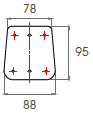 |
| 8×12 | Da 2,70 a 5,80 m | 18 fili = 6 trecce 3×2,25 | 25 kg/m | 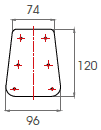 |
| 14×14 | Da 4,20 a 5,80 m | 36 fili = 12 trecce 3×2,25 | 42 kg/m | 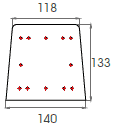 |
We realize tensile structures that requires to be anchored to the ground to grant a permanent tension of the system.
We need therefore elements that, once set in the ground, are able to grant an adequate resistance and stability. They are of different shape and size, to suit the different types of structure and soil.
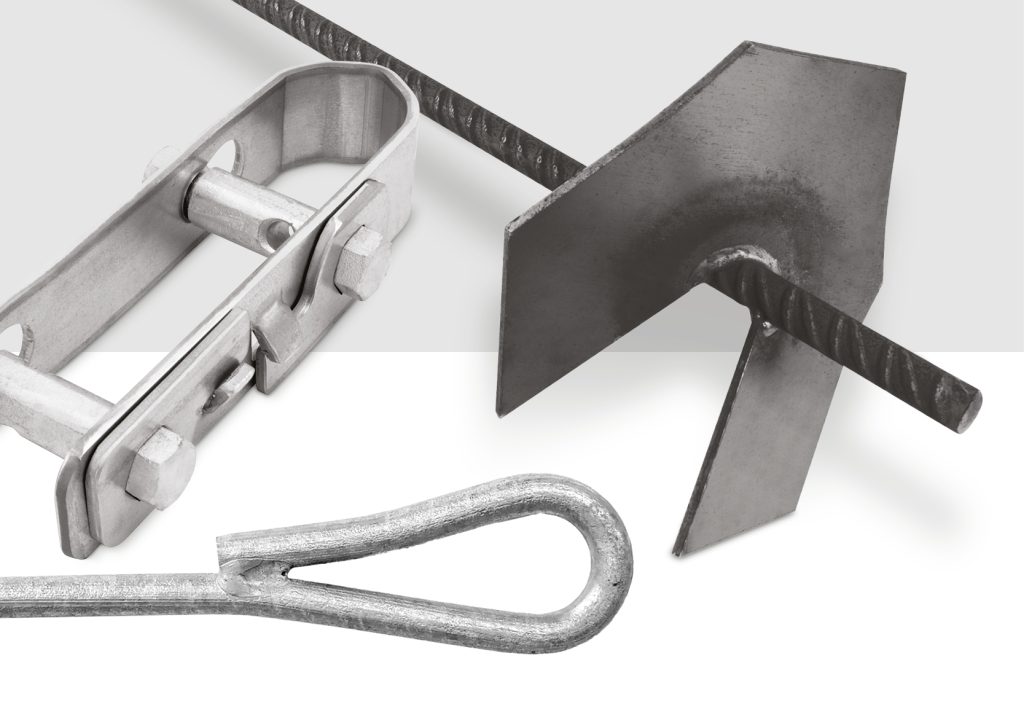
This type of anchorage consists of a rod and a reinforced concrete plate.
It is used when the soil has gravel or rock inside it or in the presence of extremely sandy soils.
The hexagonal anchors are not galvanized because steel thickness and rod diameter are so big to minimize any corrosion damage that might cause product destruction.
This type of anchoring is ideal for the creation of anti-hail, anti-rain or shading covering systems on terrain without gravel or rock.
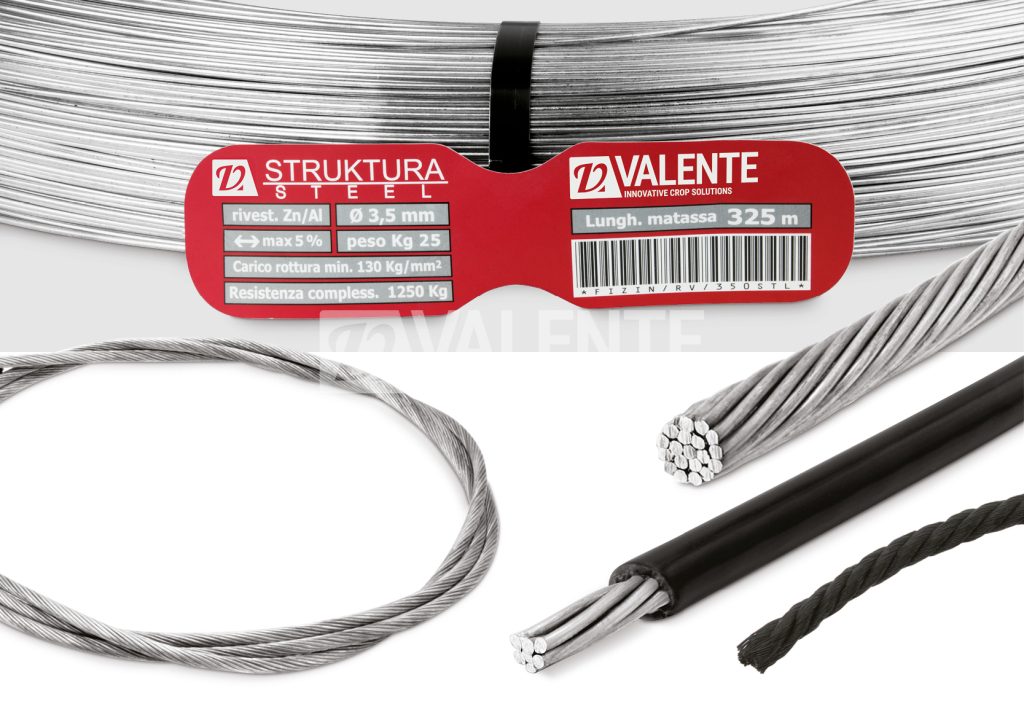
STRUKTURASTEEL steel wire is made of high-carbon steel (greater than 0.6%) coated with a zinc-aluminum alloy. It is drawn in diameters ranging from 1.60 to 4.00 mm and is used to connect all intermediate posts, providing support for plants and securing branches. It is also used to connect the ends of posts when covering them with a covering material, such as hail netting.
Cables are used to connect pile to anchor in systems with rear anchoring. Furthermore, they are used in anti-hail systems for longitudinal and transversal connection of piles, to stabilize the whole structure.
Cables, formed by intertwining wires, are highly flexible and easily adjustable to anchored parts.
Wires quantity depends on cable intended purpose and, consequently, desired resistance.
ROPSTEEL cable can also be supplied galvanized with a black plastic coating so that surface touching the net is perfectly smooth, avoiding net early wear due to brushing on cable.
A cut-to-size cable with slipknot has been created to ease installation operations and make them quicker and safer.
In small fruit crops such as strawberries, blueberries, blackberries, raspberries and currants, various insects can cause significant damage to both the plant and the fruit. Here are the main ones:
The spotted wing drosophila Drosophila suzukii (Diptera: Drosophilidae), native to Southeast Asia, appeared in Europe in 2008 in Spain and Italy, subsequently spreading throughout the continent. In Italy, D. suzukii spread from north to south and to the islands in just a few years.
The Nematus ribesii is a sawfly belonging to the Tenthredinidae family. It is known as a parasite of gooseberries.
The Anthonomus rubi, known as the strawberry or raspberry weevil, is a small curculionid beetle that causes damage particularly to the flower buds of these species.
The Frankliniella occidentalis affects several species, including strawberries, where it causes brown streaks and deformation of the petals and malformation of the fruit. In the most severe attacks, the flowers may abort and the fruit may show browning and blackening of the achenes.
Aphids on small fruits (strawberries, currants, raspberries, etc.)
The Chaetosiphon fragaefoli sucks the sap from strawberry plants. The leaves and fruits become sticky due to the honeydew secreted, on which sooty moulds grow. It is also an important vector of several viruses that affect strawberries (Crinke virus, Mild yellow-edge virus).
The Yellow currant aphid (Cryptomyzus ribis) causes blistering and false galls on the edges of the leaves, which turn a wine-red colour. This damage spreads rapidly to other plants, hindering the development of the
The Cochineal is a small insect similar to aphids that feeds on the sap of currant plants. The honeydew it secretes spreads disease and dirties the berries, reducing their value.
The whitefly belongs to the order Hemiptera. Whiteflies belong to the Aleurodidae family; they suck sap and vector certain viruses. The sugary liquid excreted by the nymphs promotes the appearance of fungi such as sooty mould (a black fungus that disfigures affected plants) on the leaves.
Leaf-eating moths (Lepidoptera): their larvae can damage leaves and compromise blueberry development. The most common are the blueberry bush moth, whose larvae feed on leaves and shoots, and the blueberry moth, which mainly attacks the fruit.
The presence of defoliating moths can be seen by the remains of buds and flowers hanging from thin silk threads.
Beetles and mining larvae can damage blueberries. Adult beetles, such as the Japanese beetle (Popillia japonica), feed on leaves and flowers, causing damage to blueberry production. Mining larvae dig tunnels inside the leaves, and adults feed on leaves and flowers, affecting production.
La rete anti insetto è realizzata dalla tessitura di monofilo plastico e viene utilizzata per coprire e proteggere adeguatamente le colture dai danni causati dagli insetti, soprattutto la DROSOPHILA SUZUKI, la CARPOCAPSA e la CIMICE ASIATICA.
Il materiale utilizzato per la realizzazione delle reti anti insetto è il polietilene ad alta densità (HDPE). Il filo utilizzato è realizzato per estrusione, fondendo e facendo passare attraverso delle griglie forate (estrusori) la materia prima; successivamente viene termostabilizzato, ovvero viene riscaldato per far diminuire tutte le ritrazioni che normalmente presenta il materiale plastico esposto a fonti di calore anche modeste.
La rete antinsetto è realizzata lavorando il monofilo con una particolare tecnica chiamata tessitura a telaio: la maglia che si ottiene con questo tipo di lavorazione è di forma rettangolare di misura variabile ed è indeformabile, cioè le dimensioni non variano quando il telo anti insetto è sottoposto alle sollecitazioni.
Le reti anti insetto sono disponibili nelle seguenti dimensioni:
Rete ANTI-CARPOCAPSA: H 2,50 – 4,00 – 4,60
Rete ANTI-SUZUKI: H 2,00 – 2,50 – 3,00

Anti-hail net is manufactured weaving a plastic monofilament and is used to cover and properly protect crops from damages caused by hail.
Net must be installed and fixed on special structures to provide total protection from bad weather, still maintaining a minimum elasticity to avoid premature material wear.
Material used to make the net is high-density polyethylene (HDPE). Wire used is made by extrusion, melting and passing raw material through perforated grids (extruders); subsequently it is thermostabilized, that is to say heated to reduce all retractions that plastic material exposed to even modest heat sources normally presents.
Anti-hail net is made manufacturing monofilament with a particular technique called “loom weaving”; obtained mesh has a rectangular 2.8 x 8 mm shape and is non-deformable, meaning dimensions don’t change when subjected to hail load.
Net weaving is “Leno weaving”, so mono-wire is woven into weft and warp threads.
Anti-hail net is certified and designed for long-lasting performance. Documentation is provided at purchase.
Actinidia (kiwi) cultivation can be threatened by various phytophagous insects, some of which cause direct damage to the fruit, while others weaken the plant, making it more vulnerable to disease. Here are the main ones:
Argyrotaenia pulchellana (Eulia) is a polyphagous leaf-rolling moth that feeds on the leaves, flowers and fruit of numerous herbaceous and arboreal plants, both cultivated and wild.
Metcalfa pruinosa is a homopteran insect belonging to the Flatida family. It can attack kiwifruit, sucking sap and producing white waxy secretions, expelling the sugary part as honeydew and causing the development of sooty moulds, which facilitate the growth of harmful fungi that cover the leaves and fruit with a black coating, reducing photosynthesis and growth.
Pseudaulacaspis pentagona (white scale insect) can cause damage by piercing the shoots of actinidia, causing stress and weakening the plant. In the most serious cases, the branches dry out and fruiting is compromised. Affected fruit develop a reddish halo around the follicles, causing serious economic damage, as they cannot be sold or exported.
Empoasca vitis (green leafhopper) pierces the leaves of actinidia, altering lymphatic flow and transpiration and causing yellowing that rapidly spreads from newly formed leaves to older ones. Necrosis begins at the edges of the leaves, which then fall off, causing a reduction in photosynthesis.
Panonychus ulmi (red spider mite) can infest kiwifruit in hot, dry weather conditions. Repeated bites from the mites reduce the functionality of the foliage, causing leaf discolouration, premature leaf fall and general weakening of the affected plants.
Autographa gamma: The larvae of these lepidoptera can cause significant damage to actinidia plants as they feed on leaves and shoots, the loss of which reduces and may affect photosynthetic capacity, leading to a subsequent reduction in fruit production and quality.
Halyomorpha halys is an extremely polyphagous species that also affects actinidia plants. In spring, the adults colonise the plants, feed and lay their eggs. The larvae, which go through several stages of development, also feed on the sap of the plants and fruits, causing them to fall and become deformed, thus compromising their marketability.
MONILIA DISEASE OF THE CHERRY TREE
Monilia is one of the most widespread and easily recognisable diseases affecting cherry trees. It is caused by two different parasites, called Monilia laxa and Monilia fruttigena, which thrive in particularly damp soil and when the plant is not pruned and disinfected correctly.
The most dangerous period is spring, when temperatures begin to rise and irrigation may be more abundant, with a higher risk of liquid accumulation and stagnation, which causes the fungus to proliferate.
It is easy to recognise when the leaves, flowers or fruits suddenly become darker, as if covered with a thick, compact layer of grey mould, which tends to rot them from the outside inwards and cause them to fall off.
The branches appear dry, with cracks that are an indication of the disease, inside which spores proliferate and where other variants of different bacteria can also insidiously develop.
CORINEO DISEASE OF THE CHERRY TREE
Corineo is also commonly referred to as shot -hole disease, precisely to emphasise how the disease manifests itself with small spots that tend to affect every part of the plant, starting with the leaves.
The characteristic colour of these anomalies is a reddish-purple that forms a distinctive halo that spreads across the entire surface, causing the leaf or fruit to fall and die.
The disease can also be recognised by the small holes that form inside the halo, as well as on the branches near the buds, which are unable to blossom and therefore transform.
The cherries also show encrustations that are difficult to remove and prevent the fruit from being edible.
This is another fungal disease that occurs mainly in spring, when the temperature is very humid and the spores find fertile ground for proliferation.
BACTERIA CANCER OF THE CHERRY TREE
The name sounds rather threatening, and indeed this is one of the most dangerous diseases that can affect this variety.
In this case, it is not caused by a fungus but by a bacterium, which likes to nestle in various types of stone fruit and lead to their premature death, first drying out the branches at the ends and then reaching the heart of the tree and its roots.
The symptoms of bacterial cancer are dark spots that appear irregularly on the leaves, with lighter, blurred halos and necrotic parts on woody areas such as branches and the trunk.
THE ROTTEN CHERRY TREE
Rottenness is one of the most common diseases affecting cherry trees and is caused by a number of factors.
The first factor is excessive irrigation of soil that is already very moist, which causes puddles and waterlogging, leading to the deterioration of the roots as they extend upwards.
The second factor is certain types of fungi, which manifest themselves in this way and must therefore be treated with sulphur-based products and other antibacterial and antiseptic agents. One of the fungi that most affects cherry trees in the Vignola area and is already present in Puglia is Armillaria mellea, a fungus that appears on the roots with a whitish colouring that can lead to the death of the plants. This is more prevalent in soils where cherry trees have been cultivated for a long time.
To prevent this phenomenon, it is therefore advisable to pay attention to soil preparation, adjusting watering according to weather conditions and pruning dry and diseased parts tactically to prevent them from damaging the fruit.
LEAF SPOT DISEASE OF THE CHERRY TREE
Also known as leaf blight, this disease tends to occur mainly in summer and is caused not by a lack of water, as one might mistakenly think, but by a fungus called Gnomonia erythrostoma.
This misunderstanding often leads to delayed action, but it is possible to recognise the difference by noticing yellow patches with a red halo around them, which tends to darken when the necrosis is already at an advanced stage.
The dry leaf tends to fall off, leaving the plant bare.
As with any other infection of this kind, the key is to use a sulphur-based product or the classic copper sulphate to stop the spores from spreading, taking care to remove any damaged parts that are beyond repair and will only encourage the disease to spread.
LEAF-RUST DISEASE OF THE CHERRY TREE
Similar to the previous disease in terms of symptoms, this disease manifests itself with brownish spots mainly on the upper side of the leaf, which gradually darkens until it dies and falls off.
The disease then spreads to the branches, preventing the buds from blooming and thus preventing fruit formation.
The white pustules that accompany this condition can be defeated with a copper-based spray, which is disinfectant and antifungal, combined with a sulphur component for a stronger action.
BLACK APHIDS ON THE CHERRY TREE
This is a disease that can be easily recognised, as it develops following infestation by small black insects that are visible to the naked eye.
These insects bite the shoots of cherry trees and other fruit trees, depositing a large number of other young aphids that do the same thing.
The tree will die quickly if immediate action is not taken, resulting in small, deformed and inedible cherries.
The only solution is to use a specific insecticide or have the tree professionally treated by a pest control expert.
In cherry orchards, various insects can compromise the quality and yield of cherries. Here are the main pests to watch out for:
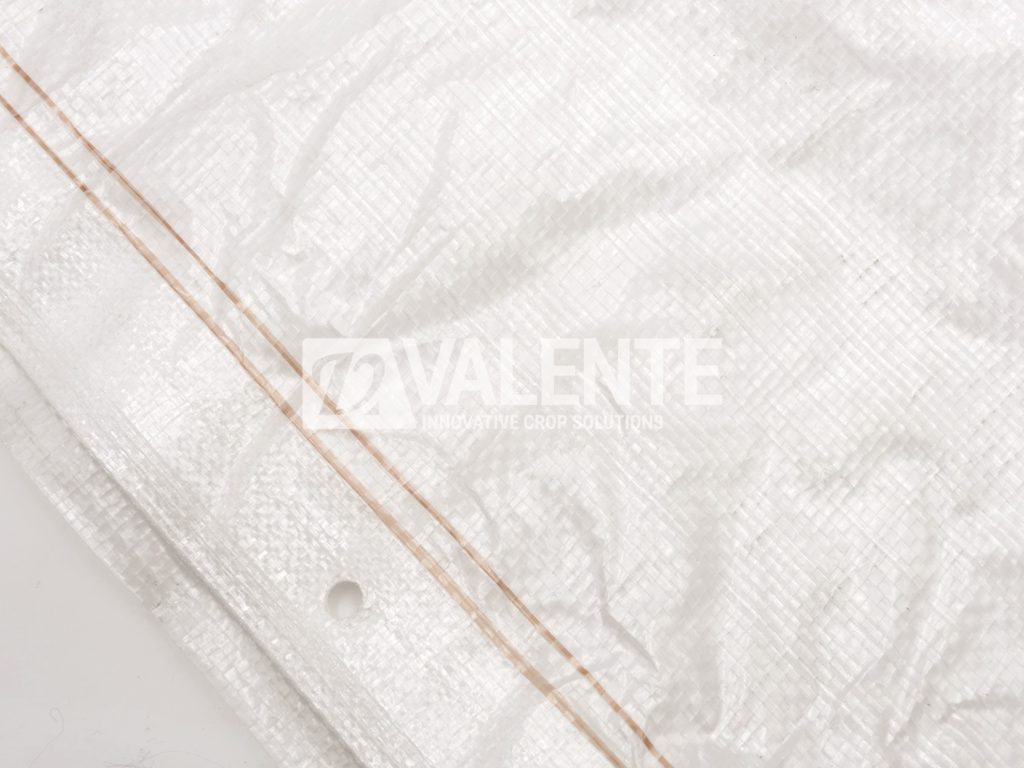
The rainproof film is a raffia fabric plastic-coated on one side and is used to cover and adequately protect crops from damage caused by rain.
Through a patented welding process, reinforced side selvedges (triple layer of fabric) are applied, essential for secure attachment to the structure; the entire film is waterproof, has considerable mechanical strength and tear resistance.
In addition, perforations are made along the edge of the film so that hooks or carabiners can be inserted to secure it to the structure.
The technical characteristics of the rainproof film are as follows:
Valente offers a quick and automatic system that allows rain covers to be opened and closed like an umbrella, for optimal cherry orchard management.
This innovative technology, installed exclusively on the Multishield structure, offers great advantages and represents a complete, effective, flexible and safe solution for farmers to protect their crops.
The particular arrangement of the Multishield system's covers allows the operator to slide them along the frame of the structure, so that they can be opened and closed as needed, with the great advantage of allowing the plants to grow in normal conditions for most of the time, covering them only when necessary, i.e. when there is a real risk of rain, thus promoting the best development.
The Valente system makes this operation quick and effective, allowing a single worker to close or open the cover much faster than manual systems.
Peach and apricot orchards are susceptible to various harmful insects that can compromise the quality and quantity of the harvest.
On peach trees, damage is mostly during harvest time; attacks during flowering and fruit set only happen in protected crops, while they are rare for open field crops. The damage is only cosmetic and shows up as discolouration of the skin, mostly on nectarine cultivars, where it can seriously depreciate the product.
Insects
The use of orchard coverings, now common practice for most crops grown using modern farming methods, actually has a fairly recent history. In the 1960s, when our company entered the market with the production of pre-stressed reinforced concrete poles, the idea of covering orchards was certainly not a priority for farmers, but, as is now clear, many things have changed in just over 60 years.
Starting in the 1980s, besides hail protection, other needs emerged such as protection from insects, rain, wind and sun.
Thanks to the experience we've gained over the years, two other new aspects have emerged that are proving to be fundamental.
The first is that these coverings, in addition to fulfilling their specific functions, can actually be multifunctional, i.e. capable of performing multiple tasks and offering different types of protection.
The second is that coverings also guarantee a better microclimate for crops in various ways, creating a more favourable environment for plant growth and increasing fruit productivity and quality.
Scientific literature on this subject is now quite extensive and, although necessary distinctions must be made regarding the type of coverings, cultivation and characteristics of different territories, it agrees on confirming the benefits in relation to the following parameters.
These are vital benefits, especially when we consider that the environmental situation is continuing to evolve and become more complicated, with mild winters and late frosts, concentrated and more intense rainfall, frequent hailstorms, excessive wind and sunlight, and an increase in alien pathogens.
This scenario leads to one conclusion: fruit growing without orchard covering systems is now unimaginable.
Obviously, there are different types of solutions, from traditional anti-hail systems to multifunctional ones complete with insect nets, single-wire or monobloc systems with different levels of automation, but all of them have a positive impact. Despite representing a significant initial investment, they bring long-term benefits in terms of improved quality and quantity of production that more than justify the costs.
In apple and pear orchards, various insects and fungi can cause significant damage to both the plants and the fruit. Here are the main ones:
Apple tree
Pear Tree
Mushrooms
The most common fungal diseases affecting apples and pears are:
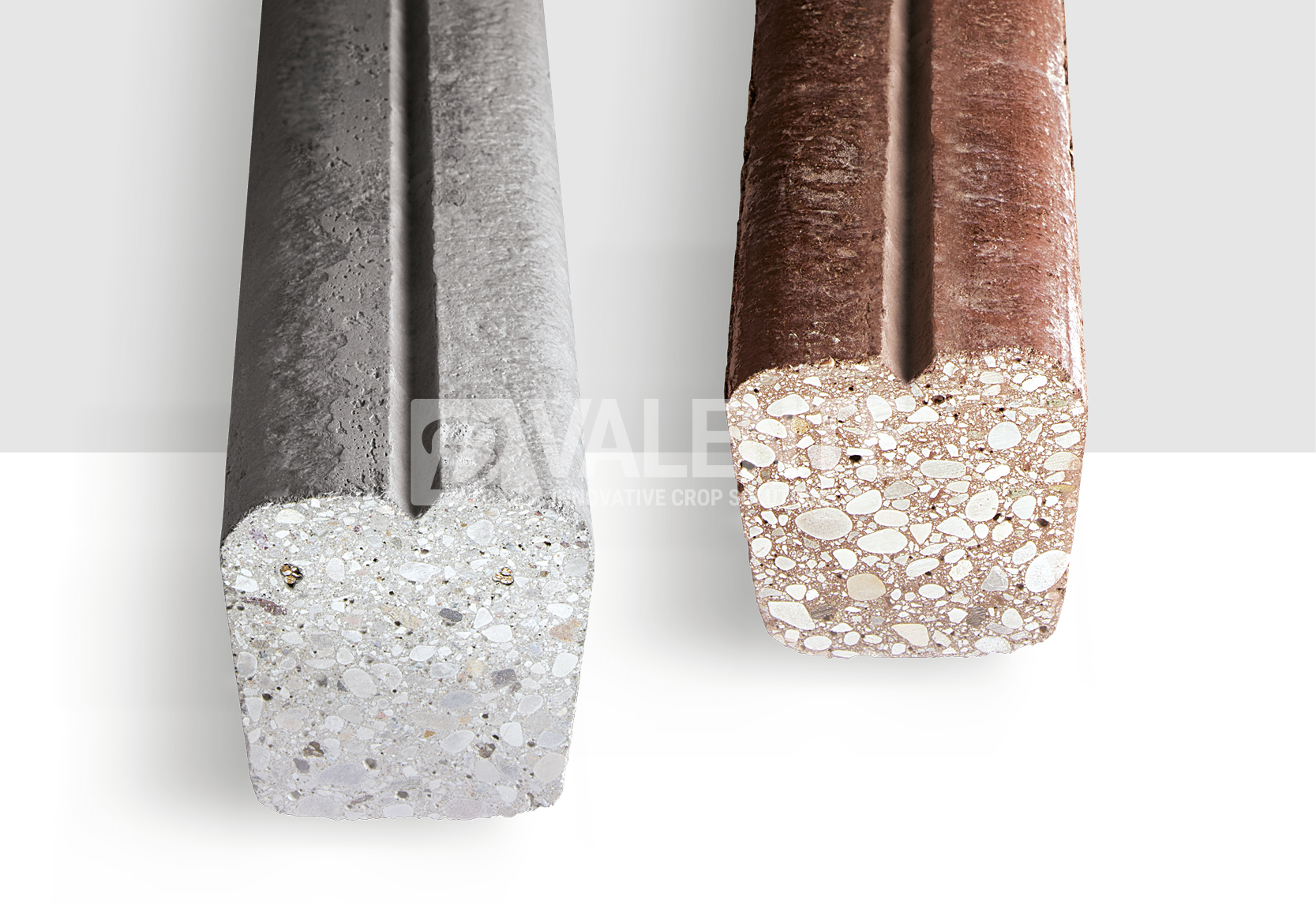
Prestressed Reinforced Concrete poles are made using pre-tensioning technique, which ensures a greater mechanical resistance.
Valente pole has a trapezoidal shape with four smooth sides and no edges, so not to wear hail nets out in orchard installations. Our trademark is on the front: V for Valente!
Valente pre-stressed cement piles are realized with the wize combination of two fundamental components: concrete (natural gravel and sand mixed with PORTLAND 525 cement) and the high carbon content steel braid with low relaxation (made of two or three braided wires with a diameter of 2.25 mm).
The quality of Valente poles are guaranteed by DNV through Product Quality Certificate.
The poles are available in the KLASSIC version in grey or brown and in 9 sections, with heights from 2 m to 5.8 m.