

As you may know, since two years, Valente has been implementing the famous "test fields" to perform a series of tests that will allow us to better understand specific structure-related issues. More specifically, we are focusing on:
- the installation method;
- the installation speed;
- the maintenance methods;
- resistance against atmospheric agents;
- the wear of the materials.
Naturally, our "test fields" are also useful for our customer, since they can see how the systems are built while strolling amongst them. This way, they can get a better idea of the advantages and types of nets that are most suitable for their needs. In short, these areas are like a showroom full of equipment where people can see the various options and best solutions for them without having to drive around everywhere.
Although there are different types of coverings, they all have one feature in common: they are all MULTIFUNCTIONAL COVERINGS. This means that they can perform several functions at the same time, while simultaneously ensuring protection in different types of fields: from rain and hail, as well as from the wind and insects. Aside from these common features, each type of net has its own distinctive ones for the type of performance and field of application required. More specifically, the systems in our test fields are equipped with the following covers:
- hail;
- rain;
- rain plus + hail;
- rain multishield.
The purpose of this article is to lead you through a technical, simple and intuitive journey that will help you better understand the features and functions of each type of system implemented in our "test fields" for when you decide to come visit us.
Today, we will talk about the "RAIN PLUS + HAIL" system.
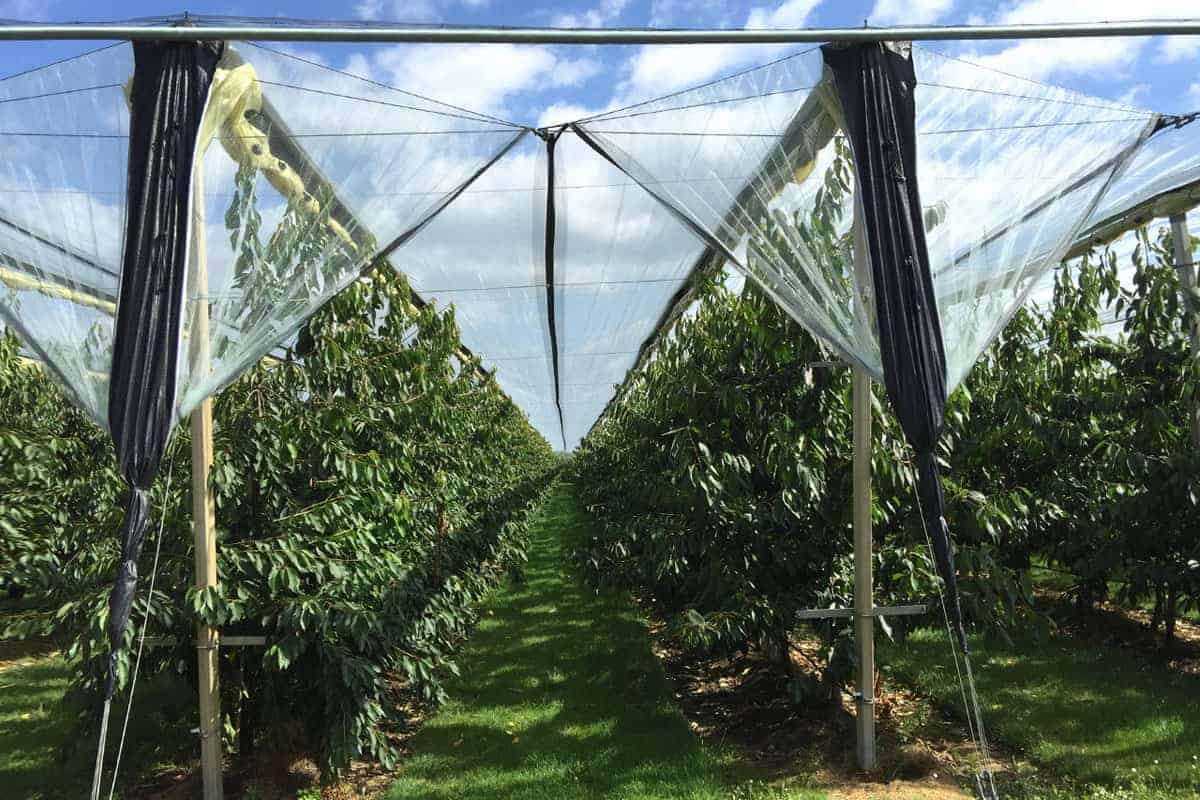
This type of Valente system is used to protect orchards from rain, in particular to cover cherry trees with large trees or in any case where there is a height of more than 4,00 meters.
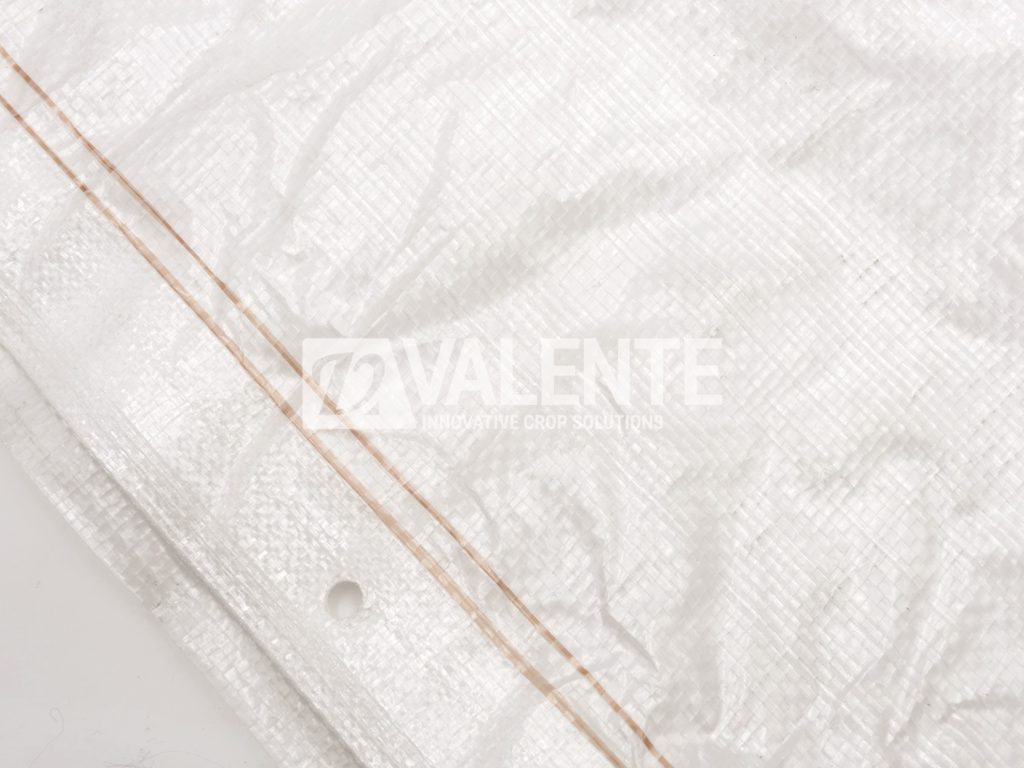
This type of system is equipped with a waterproof fabric consisting of woven polyethylene (to confer a mechanical resistance to the material) to which a thin layer of plastic film is added (to make it waterproof). The same is then completed with two reinforced and perforated edges that are fastened to the structure and that allow the net to resist against the stress to which it will be subjected.
This structure, which also has a film layer, can be defined as being multifunctional since it can perform several functions. In fact, it is:
- rainproof
- hailproof
- wind breaking
- shadowing
- insect proof (Dosophila Suzuki, Cydia, Stink bug)
In order to ensure the right level of effectiveness under various conditions, this system must also be designed in a suitable manner. Furthermore, close attention must be paid to well-defined rules to avoid unpleasant surprises during bad weather conditions.
The anti-rain net of this structure acts as a physical barrier that fights against the wind; we thus need great resistance to withstand such stress, whether as a result of violent gusts of wind or non-violent winds that continue to blow for days. Therefore, in order to avoid unpleasant surprises, we must follow these basic rules:
Rule #1
The posts must be positioned at a maximum distance of 5 meters from each other to create a sturdy post grid.
Rule #2
All of the posts must be anchored to the ground in order to prevent the wind from literally pulling them out of the ground.
Rule #3
The caps must be securely fastened to the posts in order to prevent the wind from uncovering the structure.
Rule #4
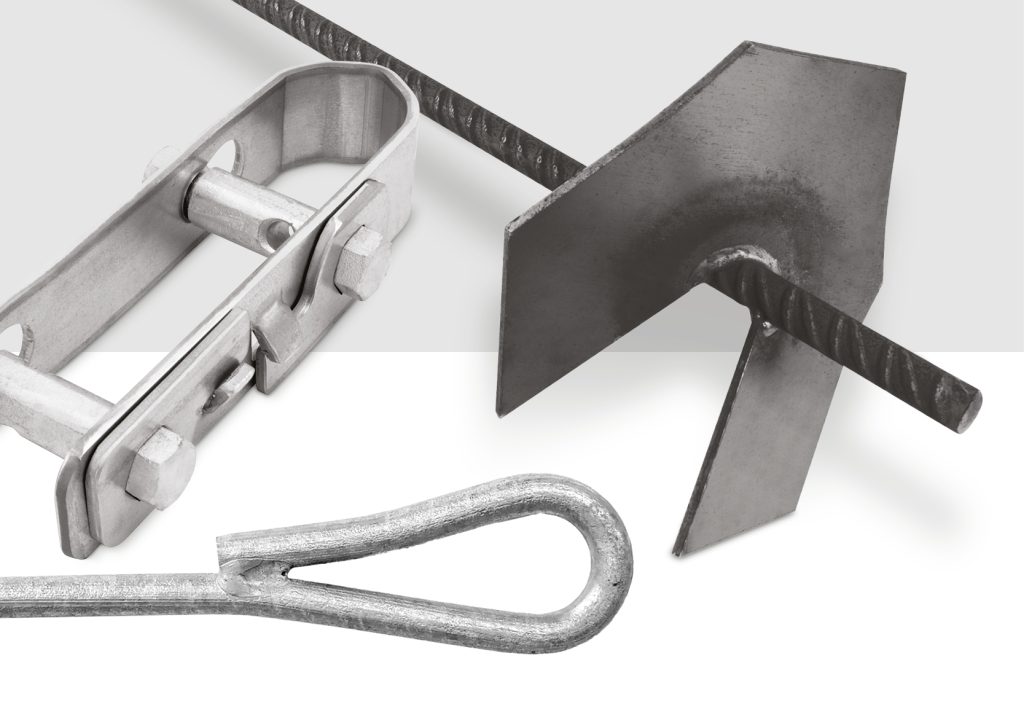
We must create a weak point designed to release the tension.
By weak point, we mean the installation of an elastic string that can withstand the stress of the wind while "weakening" its effect to preserve the net's integrity. It is clear that the point that is most often subjected to stress will be most susceptible to wearing, but it's best to replace an elastic string than to have to rebuild an entire system!
Besides these 4 rules, we must also always remember to apply one of the essential principles of the nets; making sure the space between the ground and the film does not exceed the width of the row (H<L) in order to prevent rain or hail from penetrating and damaging the fruits.
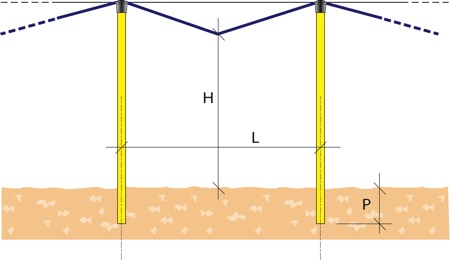
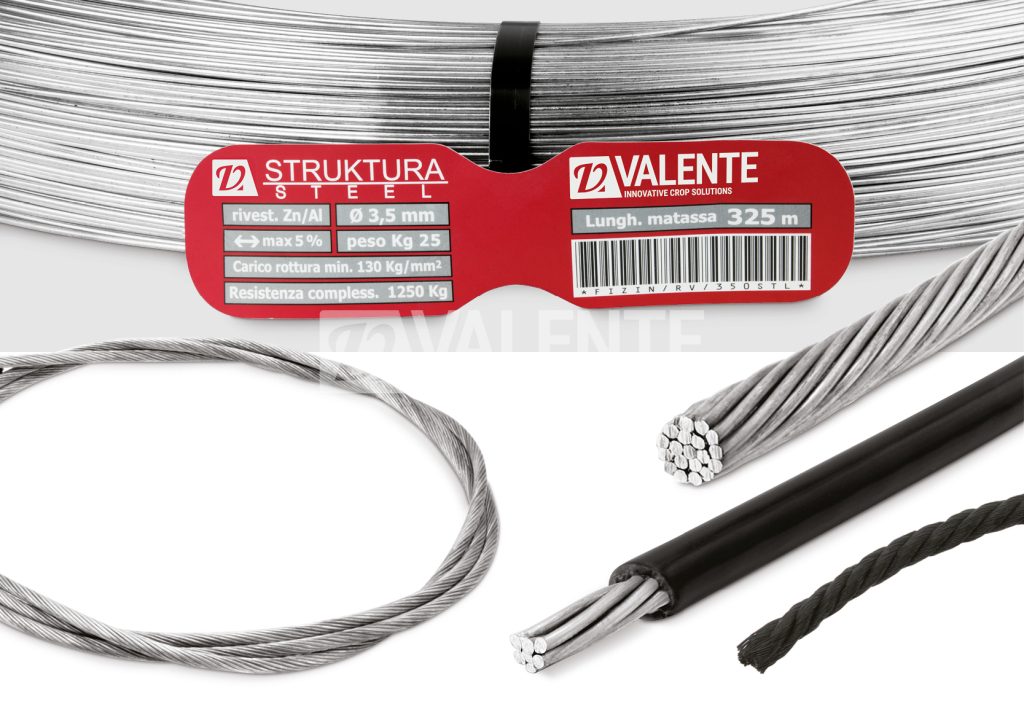
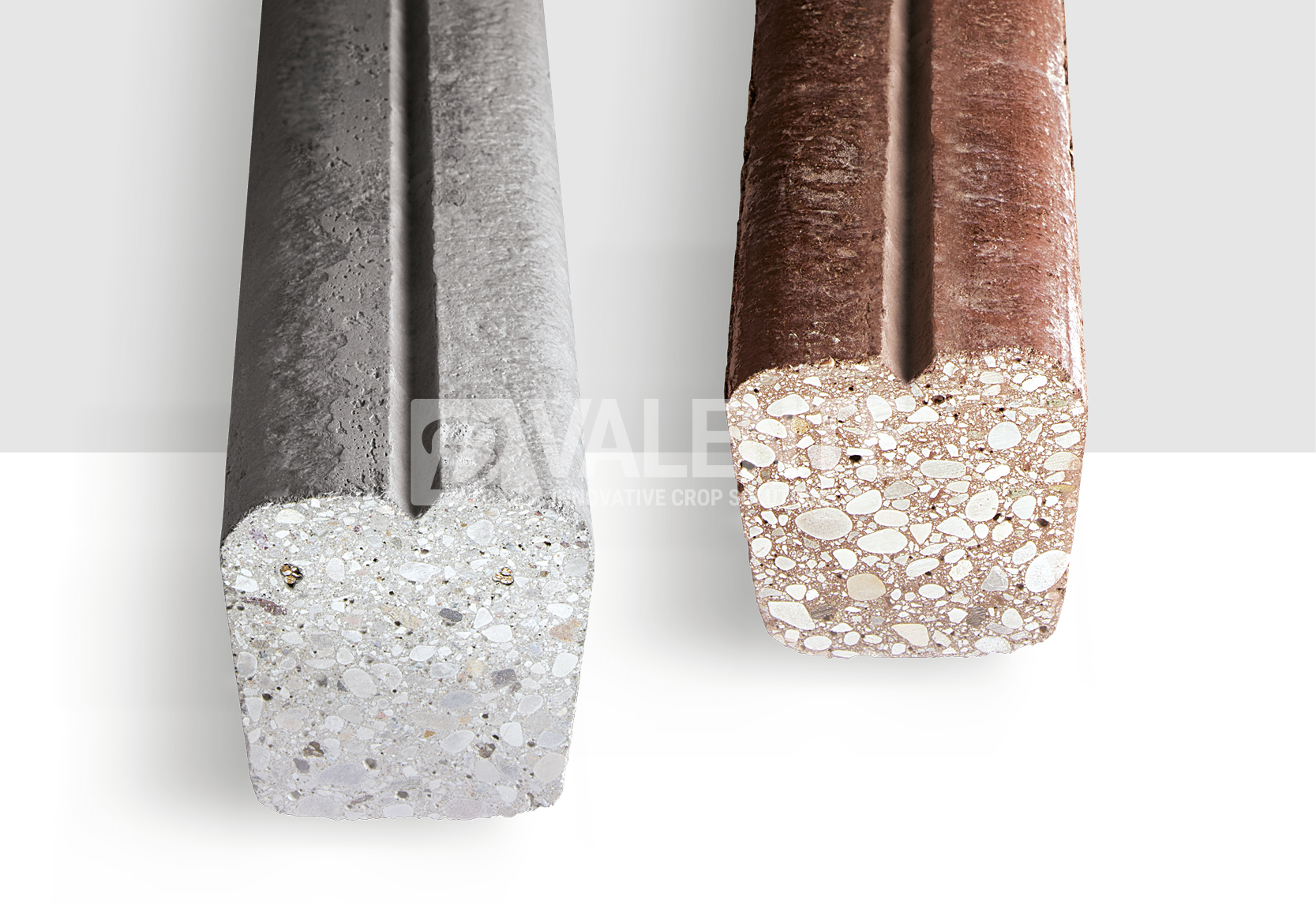
The structure must be implemented using prestressed concrete posts of an appropriate size for the dimensions of the system and while taking into account both the height of the structure and surface that needs to be covered. The entire perimeter of the system must be anchored and placed in perfect tension before applying and fastening the protective net in order to make sure that the orchard is fully covered.
In particularly hail prone areas, it's better to use the double film layer + anti-hail net since the fruits must usually only be protected from rain for 30 to 40 days a year, while the plants must be protected from hail for at least 7 months. Whenever needed, the installation can be equipped with closure systems along its perimeter to create a "monoblock" and to prevent insects from entering.
However, the closure system can be customized according to the various business needs in terms of system optimization and surrounding space.

If the structures are adequately protected and implemented according to the installation rules, we can then devote all of our time to the harvest and spectacular fruits without any reasons to worry!